
Preroll Machines Under $25K: 2026 Buyer’s Guide
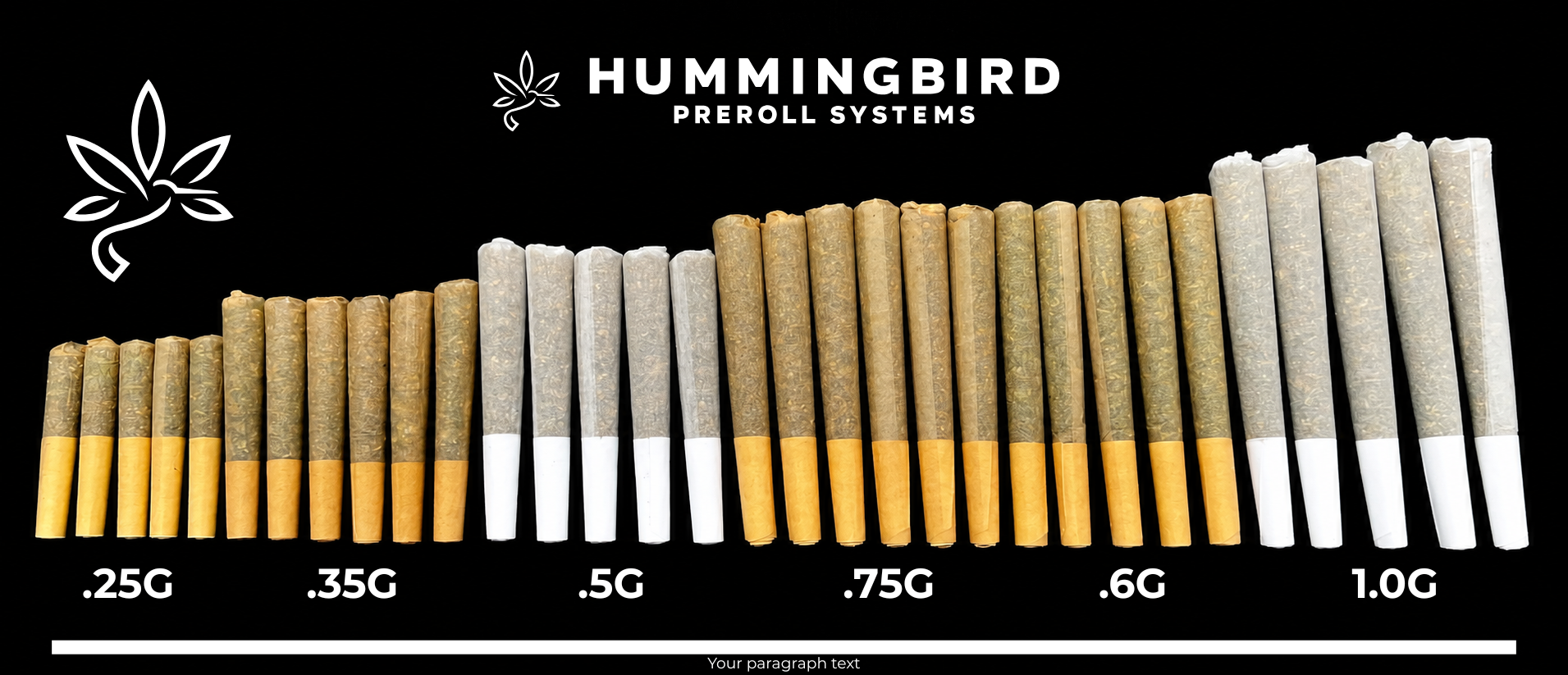
Preroll formats vary widely in size, shape, and fill weight, which can affect filling, handling, finishing, and overall production workflow.
For smart and savvy preroll manufacturers, the sweet spot often is not a six-figure automated preroll production line. It's a modular, semi-automated preroll system that gives a small crew meaningful production capacity without requiring the volume, floor space, maintenance, and capital investment of fully automating preroll production.
For a deeper look at lean production thinking, see The Future of Preroll Manufacturing Is Touching Fewer Prerolls.
But comparing preroll machines isn't as simple as comparing a production number on a manufacturer's website. Nearly every equipment manufacturer listed below claims the ability to produce 10K+ prerolls with a two-person workflow.
We've seen preroll workflows and manufacturing operations across the country, and we can say without a doubt that all of the machines below can put up production numbers.
The harder question is: What are they producing?
There is no established industry standard for manufacturing a perfect preroll. Weight accuracy matters. Density matters. Draw matters. QA matters. And ultimately, the finished preroll has to smoke properly.
That makes comparing machines on production speed alone difficult. So we'll start with something we can compare objectively: What does it cost to build a functional two-person production workflow?
What are the pros and cons? What are the key operational differences — noise, cleanability, product flexibility, ease of use, and the ability to adapt to different materials?
Preroll Manufacturing: For Operators, by Operators
The first three preroll machine companies listed below were founded by former licensed cannabis operators. To us, that matters.
Former operators have lived with the realities of production — the flower, the people, the cleaning, the changeovers, and the bottlenecks. They've taken those experiences and designed systems intended to be intuitive, relatively easy to operate, and, in different ways, improve upon the dominant method of manufacturing prerolls in the U.S.: vibration.
For the comparison below, the guidelines are simple:
Build a two-person workflow capable of producing both 84/26 and 109/26 prerolls with as little idle time as possible.
Manual preroll cone loading is normalized across every system. A skilled operator can load approximately one cone every 1–2 seconds. We also configured enough tooling to keep two people working.
If a tray is inside the machine, the operators should be able to prepare the next batch. If one operator is finishing the previous batch, the other should still be able to stage production.
That means the real purchase price may include additional trays, metering tools, finishing tools, compressors, or other equipment beyond the advertised machine price.
Preroll Machine Comparison: Price, Filling Method & Versatility
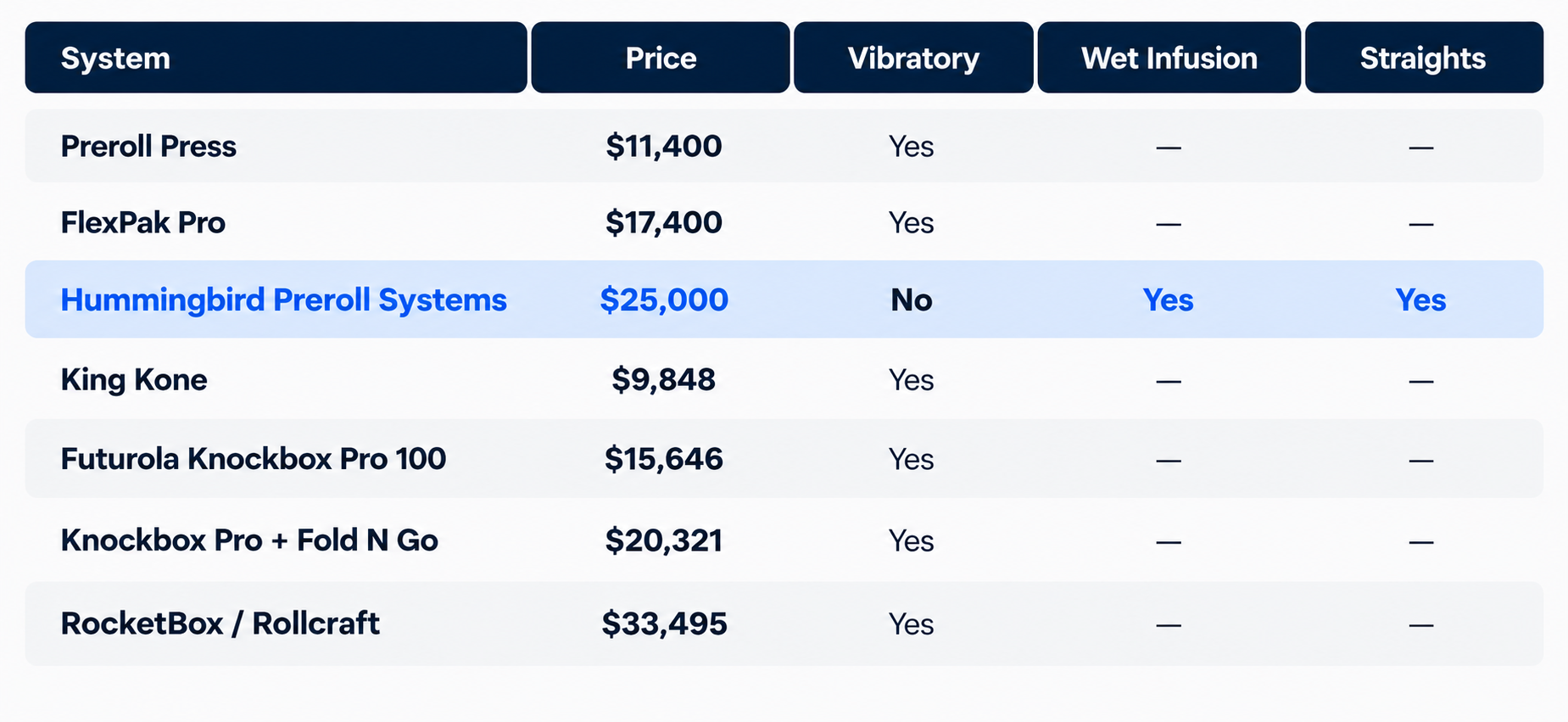
2026 comparison of preroll machine workflow pricing and key production capabilities.
View the full preroll machine price comparison
Why Hummingbird Uses Smaller 30-Cone Pods
We believe smaller, 30-cone pods create a faster continuous preroll production workflow.
The important number isn't how many cones a machine can hold at once. It's how quickly two operators can keep the production process moving.
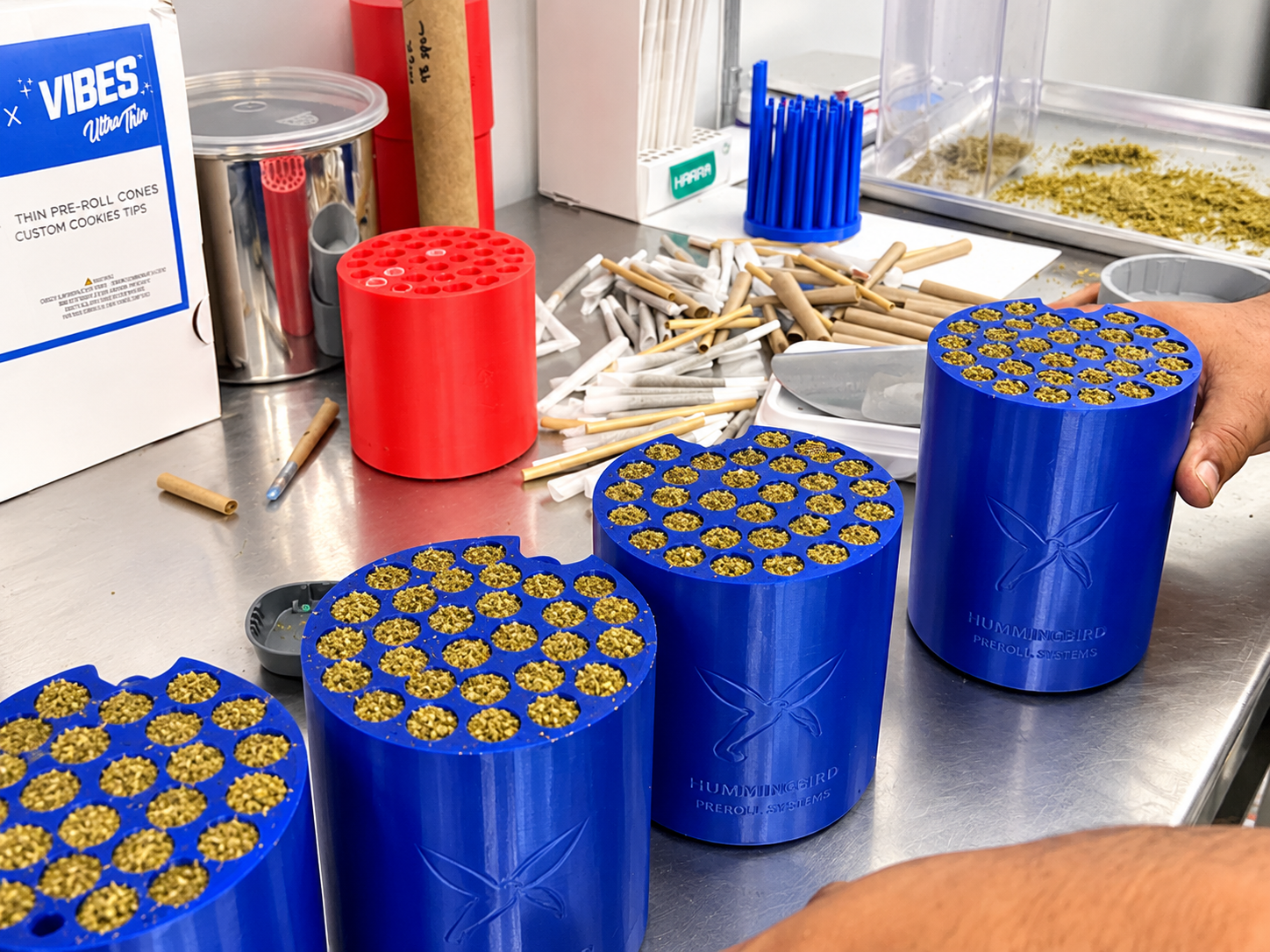
Smaller 30-cone pods let operators stage the next batch quickly and keep production moving continuously.
A large tray may hold 121, 169, or even 500+ cones, but somebody has to load those cones. If cone loading can't keep pace with the machine, the size of the tray becomes a labor bottleneck rather than a production advantage.
With 30-cone pods, an operator can stage the next batch quickly while production continues. Instead of waiting for a large tray to be completely loaded, smaller batches can continuously move through the process.
That's why we don't believe bigger tray = faster production.
Trays have to be loaded. Flower has to be distributed. Finished prerolls have to be removed. And the next batch has to be ready before the machine stops.
What matters is the speed of the entire two-person workflow.
Cannabis Is Different — and Infused Prerolls Change the Equation
Cannabis isn't a uniform industrial input. Cannabis is variable. Operators are human.
Moisture content changes. Cannabis grind size changes. Different cultivars behave differently. Infused preroll material behaves differently from straight flower. Even two batches of the same cultivar can move through equipment differently.
The growth of infused preroll production changes the equation even further. Depending on the type and method of infusion, you're no longer asking a machine to handle only ground flower. Material characteristics can change dramatically, and the production system has to be able to adapt. For a deeper look at this manufacturing problem, see Hummingbird's Infused Preroll Manufacturing Series.
A preroll machine that performs perfectly during a manufacturer's demonstration doesn't necessarily behave the same way with the material you're processing tomorrow.
That's why adjustability and operator control matter.
Why Preroll Machine Speed Doesn’t Tell the Whole Story
Almost every preroll equipment manufacturer publishes some version of a production-speed number.
Those numbers can be useful, but they rarely describe the entire production cycle.
A machine might fill a tray of cones in 60 seconds. That doesn't mean you're producing a finished tray every 60 seconds.
Someone still has to load cones, prepare flower, meter material, run the machine, unload the tray, finish or close the prerolls, inspect them, and prepare the next batch.
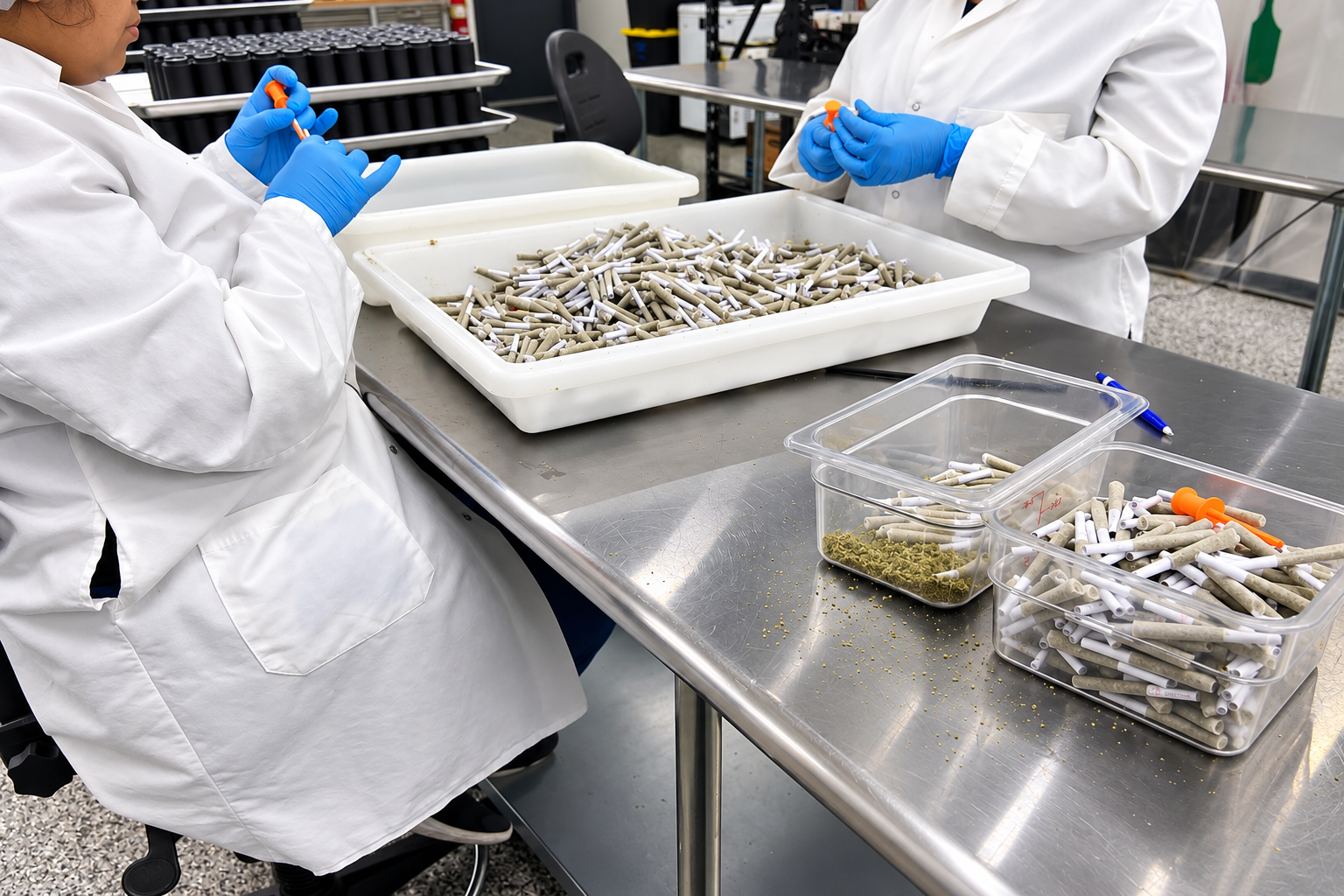
Post-fill QA can require significant hands-on labor for inspection, adjustment, and finishing before prerolls are ready for packaging.
If the machine finishes before your operators can prepare the next tray, the machine waits.
If operators finish before the machine does, the operators wait.
The fastest preroll machine isn't necessarily the fastest preroll production workflow.
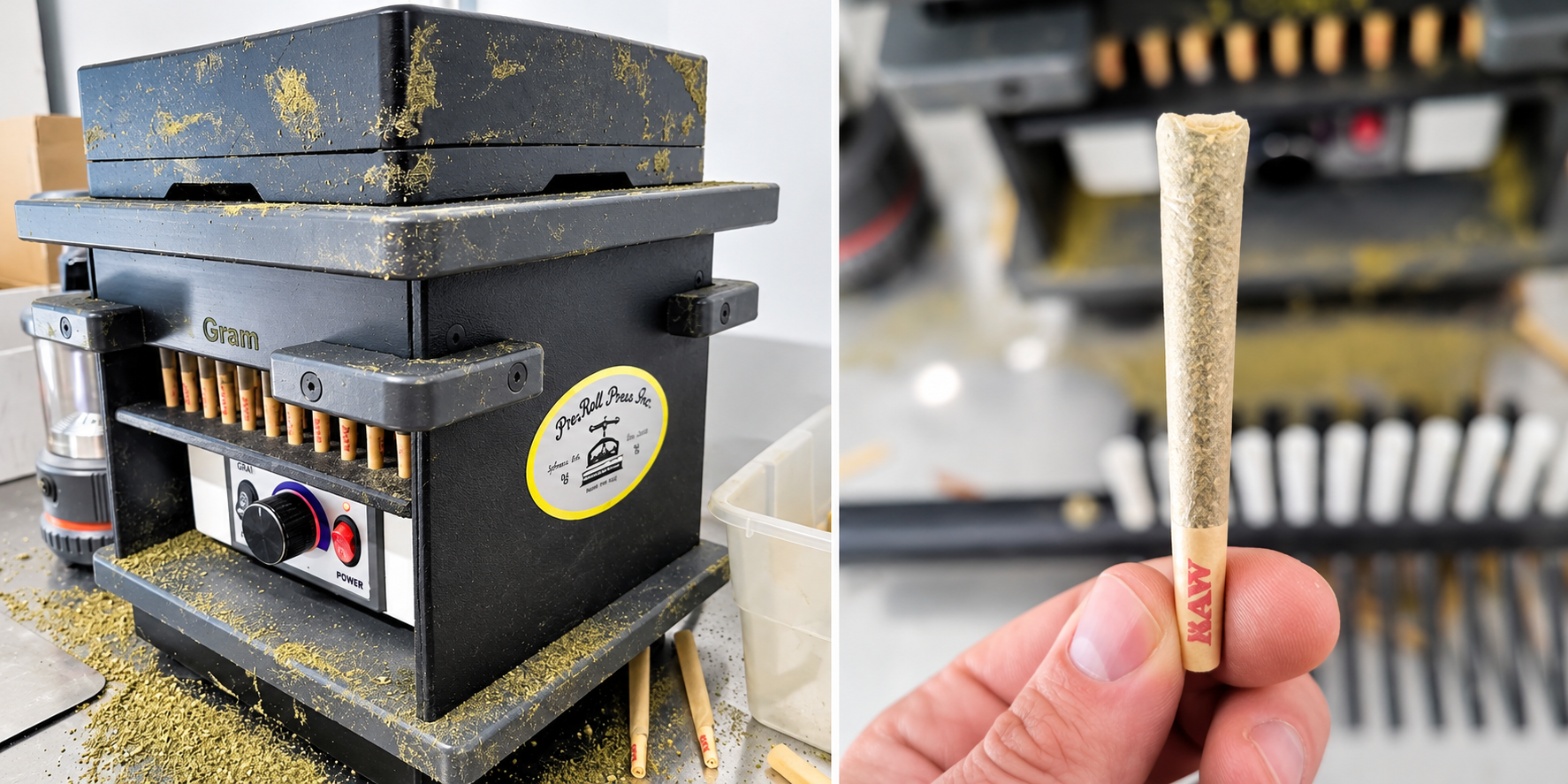
PreRoll Press filling system and a finished cone produced during operation.
That is also why the equipment price alone does not tell you what a preroll actually costs to manufacture. See What Does It Really Cost to Manufacture a Preroll? for a separate look at labor, touch points, and machine ROI.
Vibratory vs. Centrifugal Preroll Machines
Most preroll machines in this price category rely on vibration to move ground flower into cones.
Vibration works, but the results depend heavily on the material, grind, moisture, machine settings, and operator technique.
Centrifugal preroll filling approaches the problem differently by using controlled rotational force to distribute material.
The distinction matters because the goal isn't simply to get cannabis into a cone.
The goal is to repeatedly produce prerolls with consistent weight, density, draw, and shape while minimizing the amount of operator intervention required to correct them.
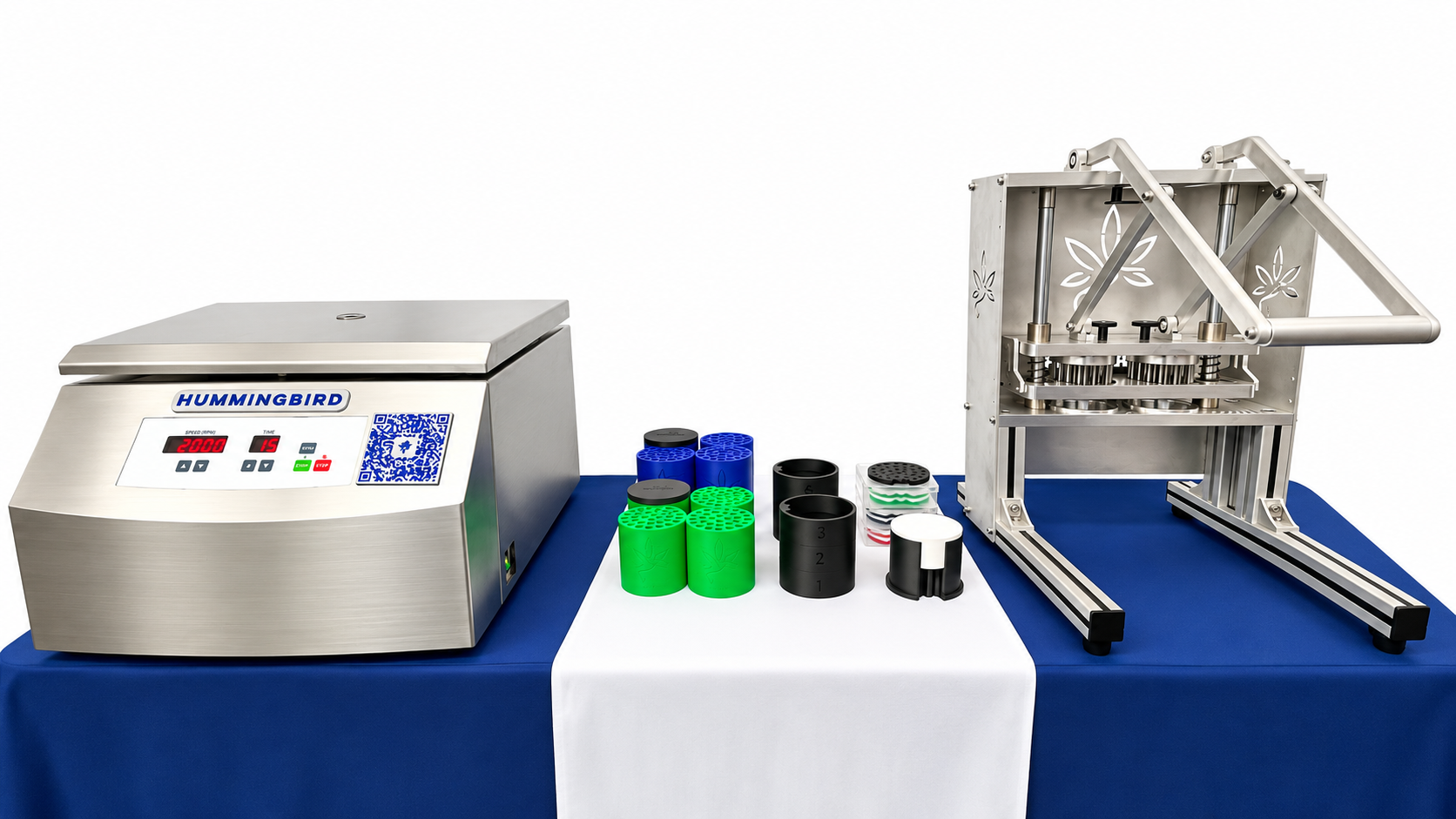
Hummingbird’s modular preroll workflow combines filling, pod-based handling, and finishing equipment for small production teams.
Why We Built Hummingbird Differently
There are less expensive machines in this comparison. There are machines with larger trays. And there are machines capable of putting up impressive production numbers under the right conditions.
That's not the argument we're making.
We built Hummingbird around a different question:
What does a small production team actually need to manufacture great prerolls every day?
That means looking beyond cycles per minute.
It means considering the people loading cones, changing strains, cleaning equipment, working with different flower, producing infused products, switching formats, inspecting finished prerolls, and keeping production moving throughout an entire shift.
For us, the best commercial preroll machine isn't the machine that wins one speed test.
It's the system that gives operators the most control over an inherently variable plant while making the entire production workflow simpler, quieter, cleaner, and more adaptable.
That's why we use smaller pods.
That's why we chose centrifugal filling instead of vibration.
That's why we built around multiple preroll formats and infused products.
And that's why we think the right comparison isn't machine versus machine.
It's production cell versus production cell.
When you compare what two operators actually need to produce consistent, sellable prerolls day after day, that's where we believe Hummingbird earns its place in the conversation.
If you want to compare your own production goals, formats, labor, and workflow, schedule a demo with Hummingbird.
