
Why Glass Tip Pre-Rolls Are Cannabis’s Next Premium Signal
Why Glass Tip Pre-Rolls Are Growing in Commercial Cannabis
Pre-roll manufacturing has long been focused on three things: speed, consistency, and throughput.
Today, the conversation is different. The category has matured, dispensary shelves are crowded, and in many markets flower prices continue to decline. When most brands are offering comparable-quality flower at comparable prices, it’s becoming harder to stand out based on what’s inside the cone alone.
That’s driving a wave of innovation: multi-packs, dogwalkers, hash holes, glass and ceramic tips, blunt tubes, hemp wraps, specialty cones. It’s not that the traditional paper crutch and filter stopped working. It’s that brands are looking for new ways to differentiate themselves.
One trend we’ve been watching closely at Hummingbird is the growing number of customers asking whether we can support glass-tipped pre-rolls. We talk with manufacturers, cone suppliers, and operators across North America every day, so we see these shifts developing before they hit dispensary shelves broadly. Suppliers like Custom Cones USA and Preroll Distro, the top two market share leaders in blunt wrap tubes and cones, have been steadily expanding glass-tip formats because their customers are asking for them.
But the interesting part isn’t really about glass. It’s about differentiation.
Paper Tips Built This Industry — and They’re Not Going Anywhere
Paper cones are inexpensive, reliable, easy to source, and they do exactly what they’re supposed to: create structure, keep the airway open, and give the smoker a comfortable place to hold the joint. Millions of pre-rolls are produced every day with traditional paper tips, and that isn’t changing.
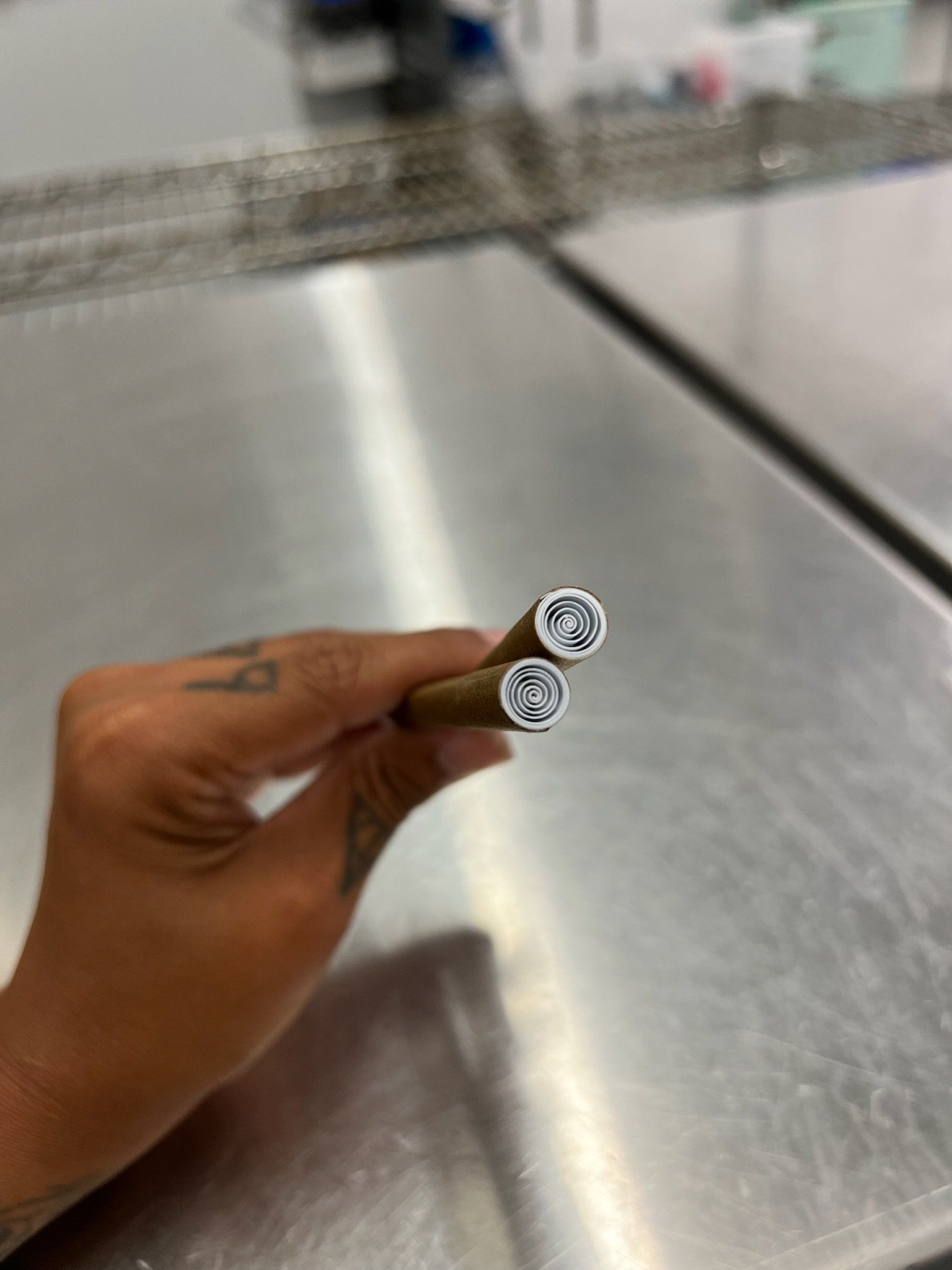
Paper tips built the modern pre-roll industry — and they’re not going anywhere. (Spiral paper tip pictured above.)
Our workflow at Hummingbird was built around flexibility specifically because not every product needs to be a luxury product, and not every consumer is looking for the same experience. Paper has its place and will keep it for a long time.
So this isn’t a “paper vs. glass, which is better” debate. It’s about understanding why some brands are choosing something different — and as cannabis matures, brands are increasingly thinking like every other CPG category. They’re not just selling a preroll; they’re selling an experience, where packaging, unboxing, and even the feel of the product shape how premium (or budget) it reads to the consumer. That’s where glass tips enter the picture.
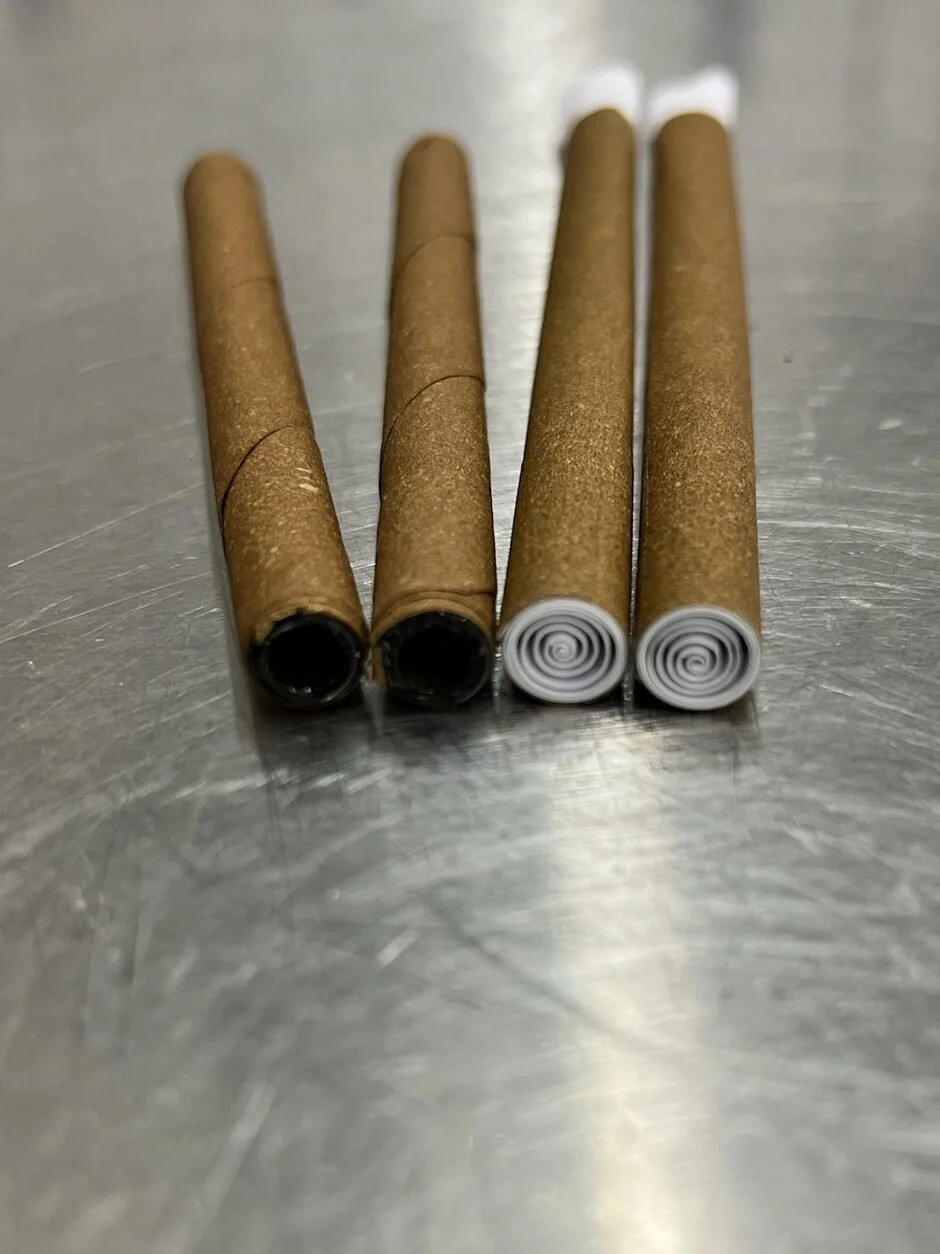
Same flower. Different experience.
Why Are More Brands Looking at Glass?
The first reaction to a glass-tipped pre-roll is usually visual — it looks and feels different from the paper-tip products next to it on the shelf. But that’s not the whole story.
There’s also a simple visual appeal to it. Glass looks sleek and modern next to a paper cone, and for many consumers that alone signals a different category of product.
Brands investing in glass aren’t just chasing something that photographs well. They’re trying to shape the experience from the moment a consumer opens the package to the last puff. If you’ve already invested in premium genetics, careful curing, terpene preservation, and strong packaging, it’s natural to ask whether the final point of contact — the mouthpiece — can also contribute.
That’s exactly what we hear from manufacturers: questions about glass tips for premium flower, solventless products, flagship SKUs, and limited releases — ways to differentiate without touching what already made the preroll successful. As demand grew, suppliers responded, and premium glass-tip formats are now far more accessible than they were even a few years ago.
Most brands will keep paper as their workhorse format because it’s cost-effective and performs well. But for brands building a premium line or trying to stand out on a crowded shelf, glass has become another tool in the toolbox.
Which raises the real question: is this just perception, or is there actual science behind why glass feels different?
The Science Behind the Smoke
Preroll production is really a series of small engineering decisions — grind consistency, moisture content, fill density, cone quality — because each one changes the final product. The tip is no exception. It’s easy to dismiss as “just something to hold onto,” but the material at the mouthpiece influences heat, airflow, moisture, and flavor over the course of a smoking session. To be clear, glass doesn’t fix bad flower, inconsistent filling, or a poorly rolled cone — great flower and a consistent grind is still the foundation. But once everything else is dialed in, the tip is one more lever.
Heat transfer. Paper has very little thermal mass, so it heats up quickly as the cherry approaches the mouthpiece, and moisture from the smoker’s lips and combustion softens it further during longer sessions. Glass — particularly borosilicate — has more thermal mass and distributes heat over a larger surface rather than concentrating it at the tip. The difference isn’t dramatic, but many smokers describe it as smoother, similar to the difference between holding a ceramic mug versus a paper cup with the same coffee inside.
Airflow. Traditional paper crutches create an airway through folds or spirals — a simple, proven solution, though one with some tip-to-tip variation. Premium glass tips are typically manufactured with precision bores or diffuser-style openings that create a more consistent airway every time. The goal isn’t more airflow (too much causes its own problems) — it’s predictability from the first puff to the last.
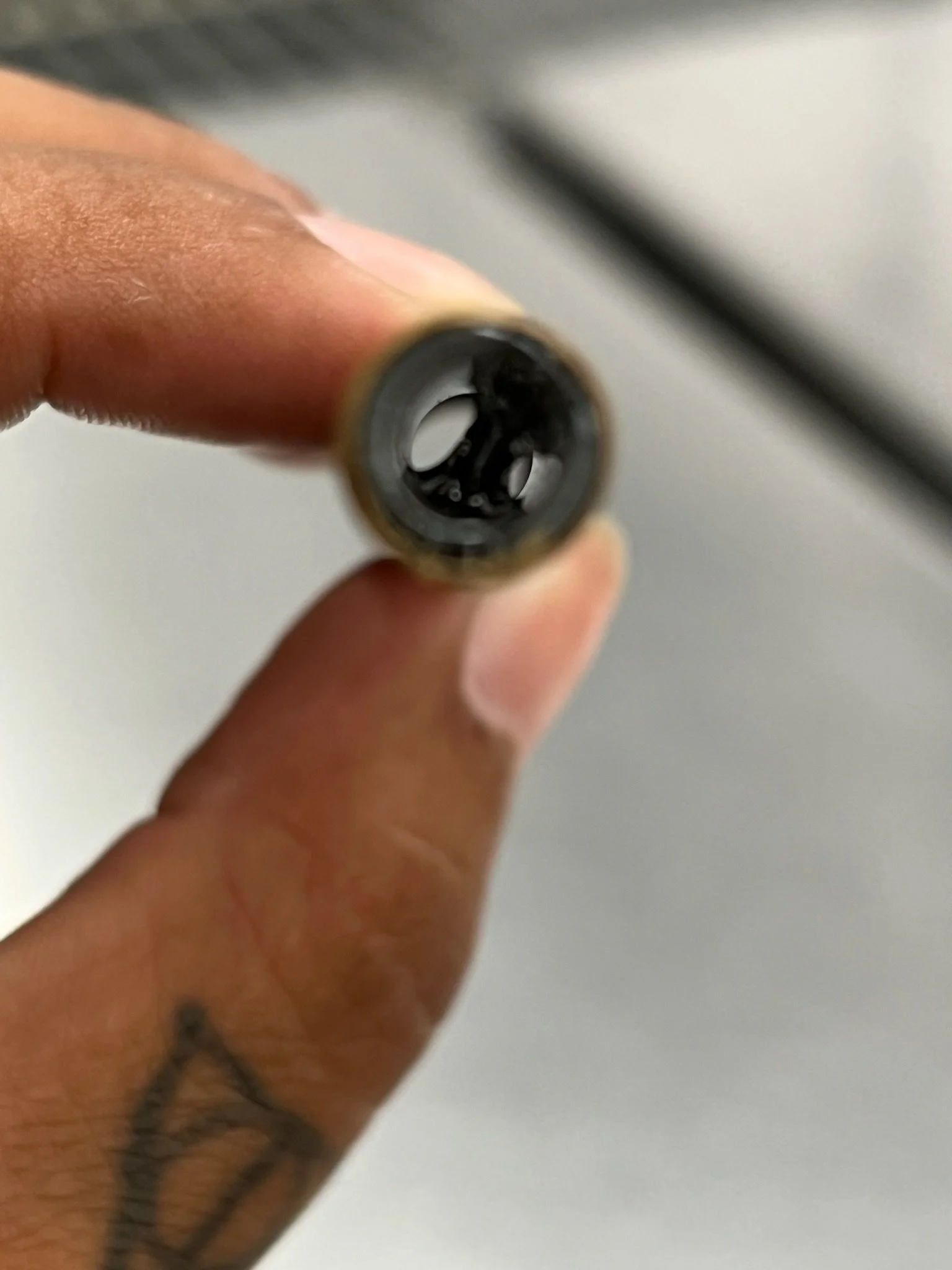
Precision starts at the tip.
Flavor.Terpenes are delicate, degrading with excess heat or oxygen exposure, which is why cultivators are so careful with harvest, drying, and curing. Paper is porous and gradually absorbs moisture, condensed oils, and resin over a smoking session, which is why the mouthpiece can taste different by the final third of the joint. Glass is chemically inert and non-porous, so smoke passes across it without the material absorbing or contributing flavor — helping preserve, rather than improve, the terpene profile the cultivator worked to build.
Moisture. Every puff introduces moisture, and combustion adds water vapor, oils, and resin on top of that. Paper absorbs these over time, which is the “soggy joint” feeling near the end of a session — softened paper, changed airflow, a damp mouthpiece. Glass doesn’t absorb any of it, so it stays rigid and consistent through the last puff.
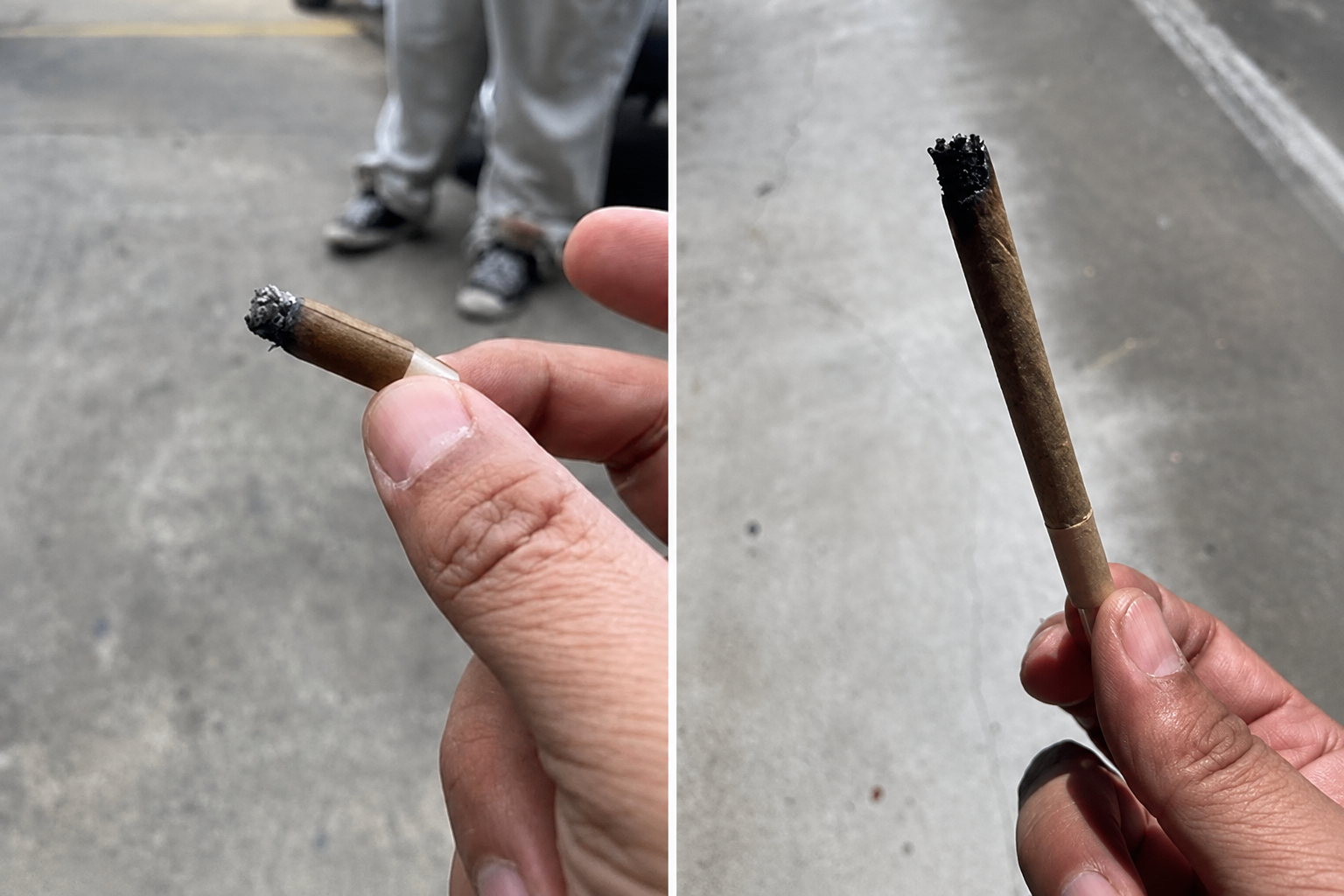
Nobody likes a soggy joint.
The Psychology of Premium
Not every difference is measurable with instruments — some live entirely in the consumer’s head. People associate certain materials with quality: glass feels substantial, smooth, and cool, the same way manufacturers use specific materials to signal quality in fragrance bottles or luxury watches before the product is ever used. When someone picks up a glass-tipped pre-roll, they’re making a judgment before the lighter comes out.
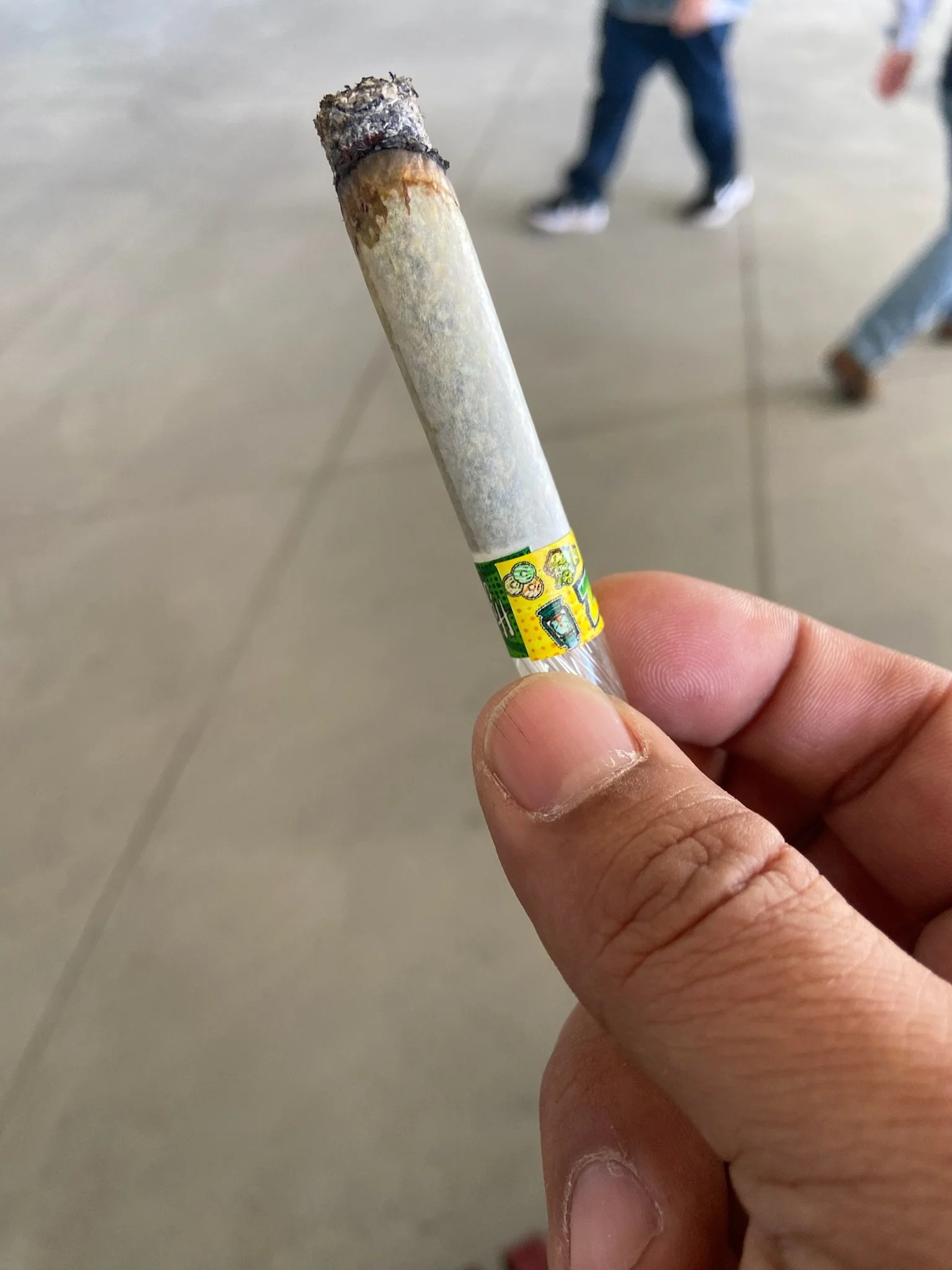
Premium starts with how it feels in your hand.
It’s also a detail we hear about directly from consumers, especially women: glass doesn’t hold a lipstick mark the way paper does, which is a small thing that ends up mattering a lot at the point of sale.
That perception is exactly why more brands are exploring glass today — not because paper stopped working, but because consumers are increasingly willing to pay for products that feel and look different. As flower prices compress and competition grows, these small differences become another way to stand apart without changing the flower itself.
Manufacturing Is Where Things Get Interesting
Everything above is about the consumer experience. But there’s a harder problem consumers never see: producing a new format efficiently, consistently, and at a cost that makes business sense. That’s where good product ideas succeed or die.
From a consumer’s perspective, a glass tip is just a different mouthpiece. From an operator’s perspective, it’s a different production variable entirely — different dimensions, weights, insertion depths, and center-of-gravity characteristics, with some designs using internal screens, pinches, or precision bores that require careful alignment.
Every new format is a new manufacturing consideration, which is part of why watching suppliers expand these options is only half the equation — building the SKU is one thing; running it consistently thousands of times a day is another.
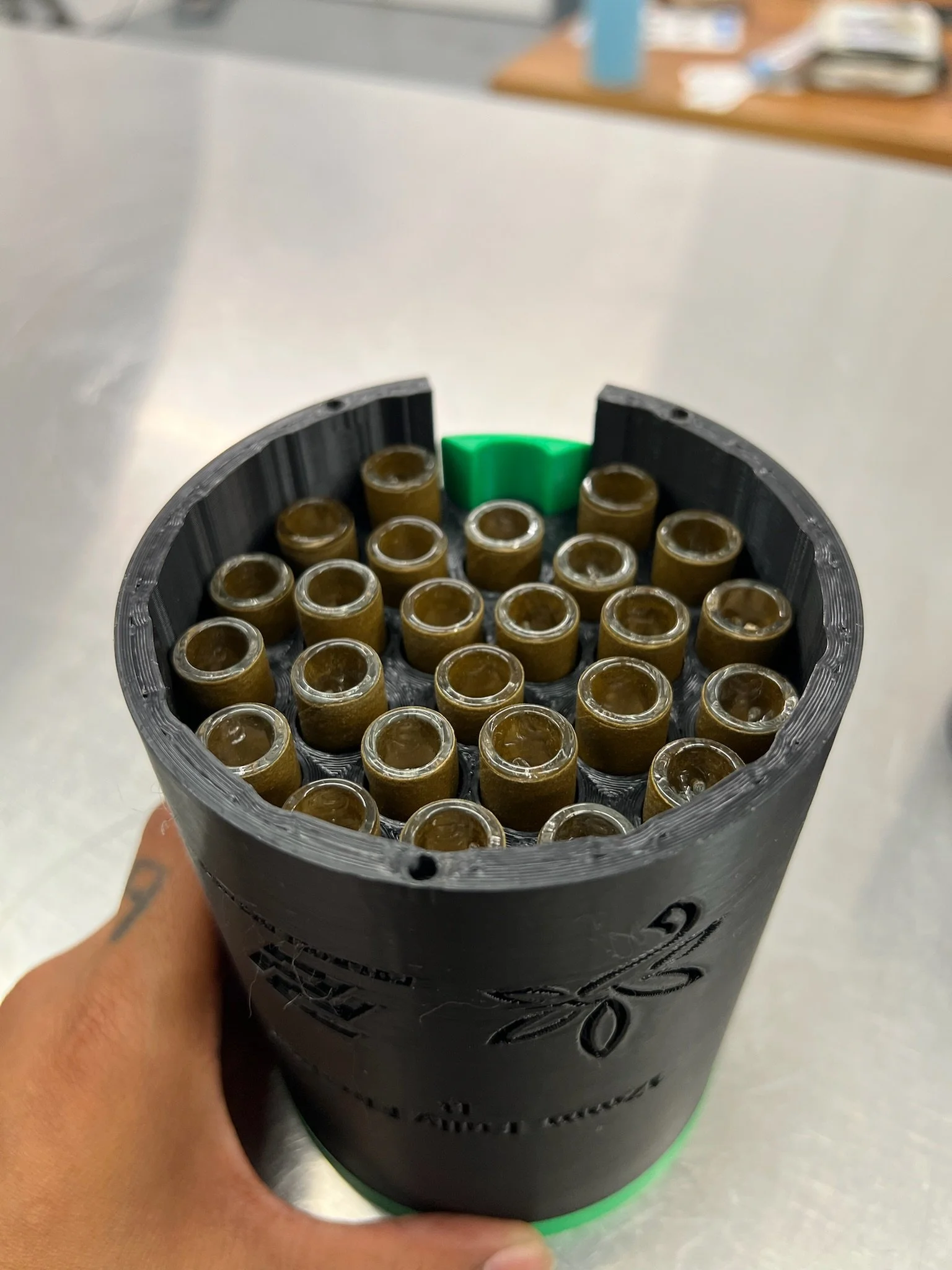
Ready for production.
The Problem Isn’t Glass Tips. It’s Inflexible Equipment.
This industry doesn’t stand still — new cone sizes, new tip materials, new formats (dogwalkers, then hash holes, then multi-packs, then whatever’s next). A lot of production equipment was engineered around one specific product, so changing the cone or tip often means new tooling, swapped hardware, or discovering the machine simply can’t run that format at all.
Innovation shouldn’t require replacing your production line. Equipment should adapt as the business evolves — and that’s the exact problem we built the Hummingbird Workflow to solve.
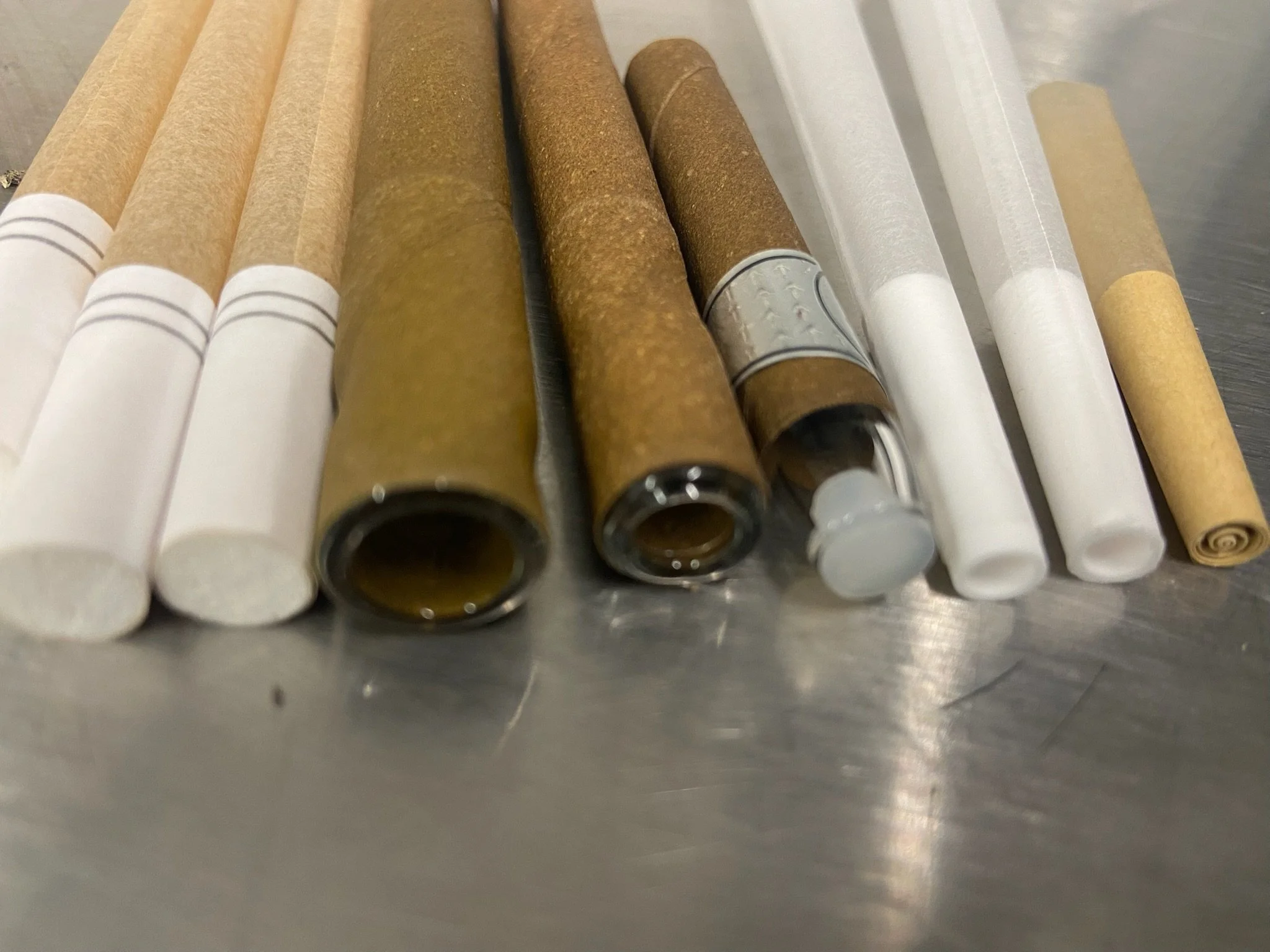
One workflow. Endless possibilities.
The Hummingbird Approach
When we designed the Hummingbird Workflow, flexibility wasn’t an afterthought — it was a requirement, because we’d already watched manufacturers ask for different weights, cone sizes, densities, infused prerolls , tube formats, and specialty SKUs. We didn’t want a machine that excelled at one product; we wanted a workflow that evolves with the industry.
That’s why we’ve worked with partners like Custom Cones USA and Preroll Distro to ensure compatibility across a growing range of formats — traditional paper cones, premium glass-tip products, blunt tubes, specialty cones, or whatever comes next. The goal is to help manufacturers build the products they want, not force them into whatever their equipment happens to allow.
Glass Tips vs. Paper Tips - Final Thoughts
Whether glass tips become a niche premium format or a shelf standard remains to be seen. What’s clear is that brands keep looking for meaningful ways to differentiate, and consumers keep rewarding the ones that pay attention to detail.
We don’t believe there’s one perfect pre-roll — we believe there are thousands of great products still waiting to be built. Our job is to give manufacturers the flexibility to build them, so the question is “what should we build next,” not “can our equipment even run it.”
The future of pre-roll manufacturing won’t belong to the companies that build one product well. It’ll belong to the ones with the flexibility to respond as consumer preferences keep shifting.
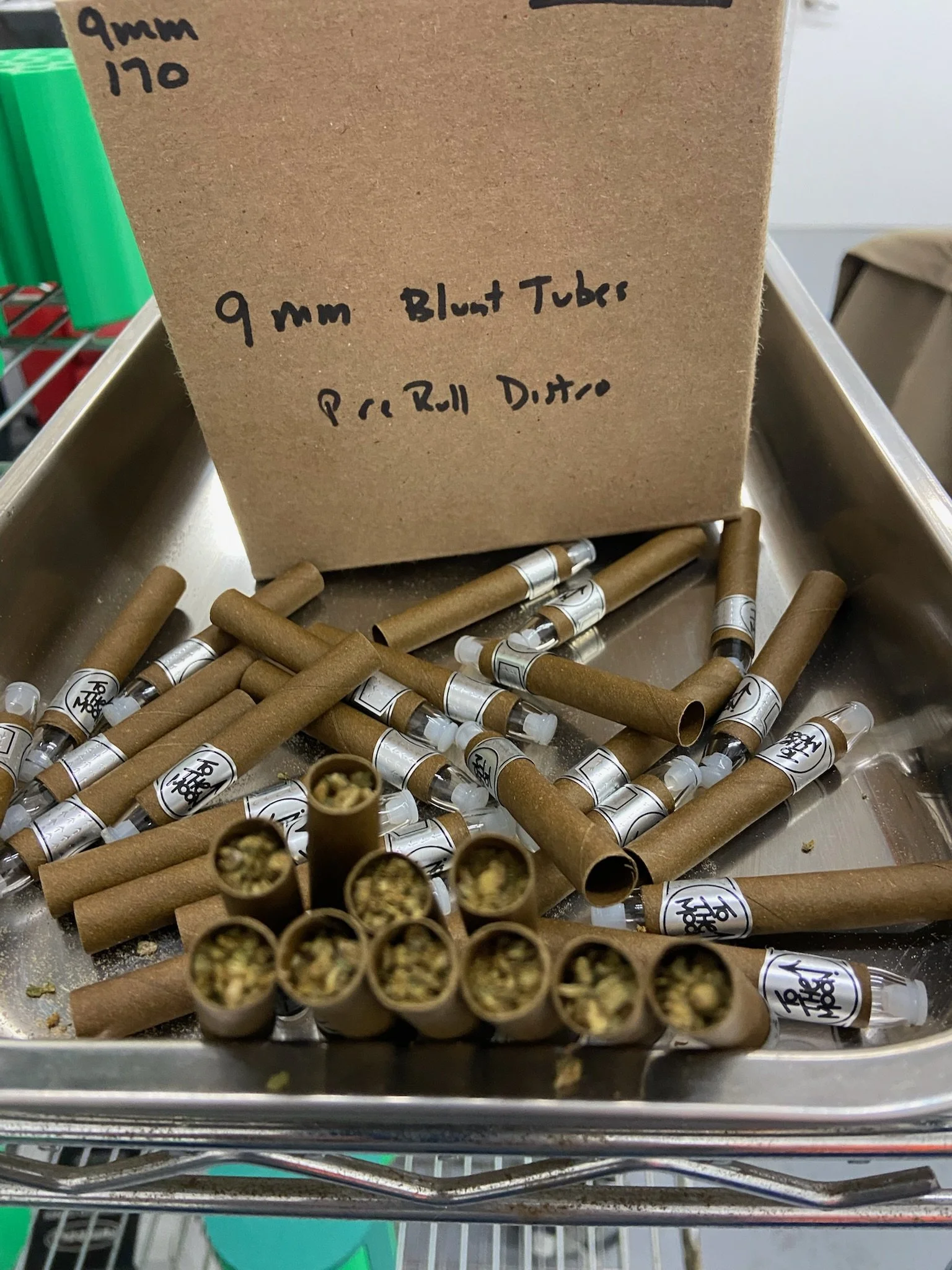
Build the product your customers want.
