

Injection, Coating & Automation: Inside Infused Preroll Manufacturing
THE INFUSED PREROLL MANUFACTURING SERIES — PART 2
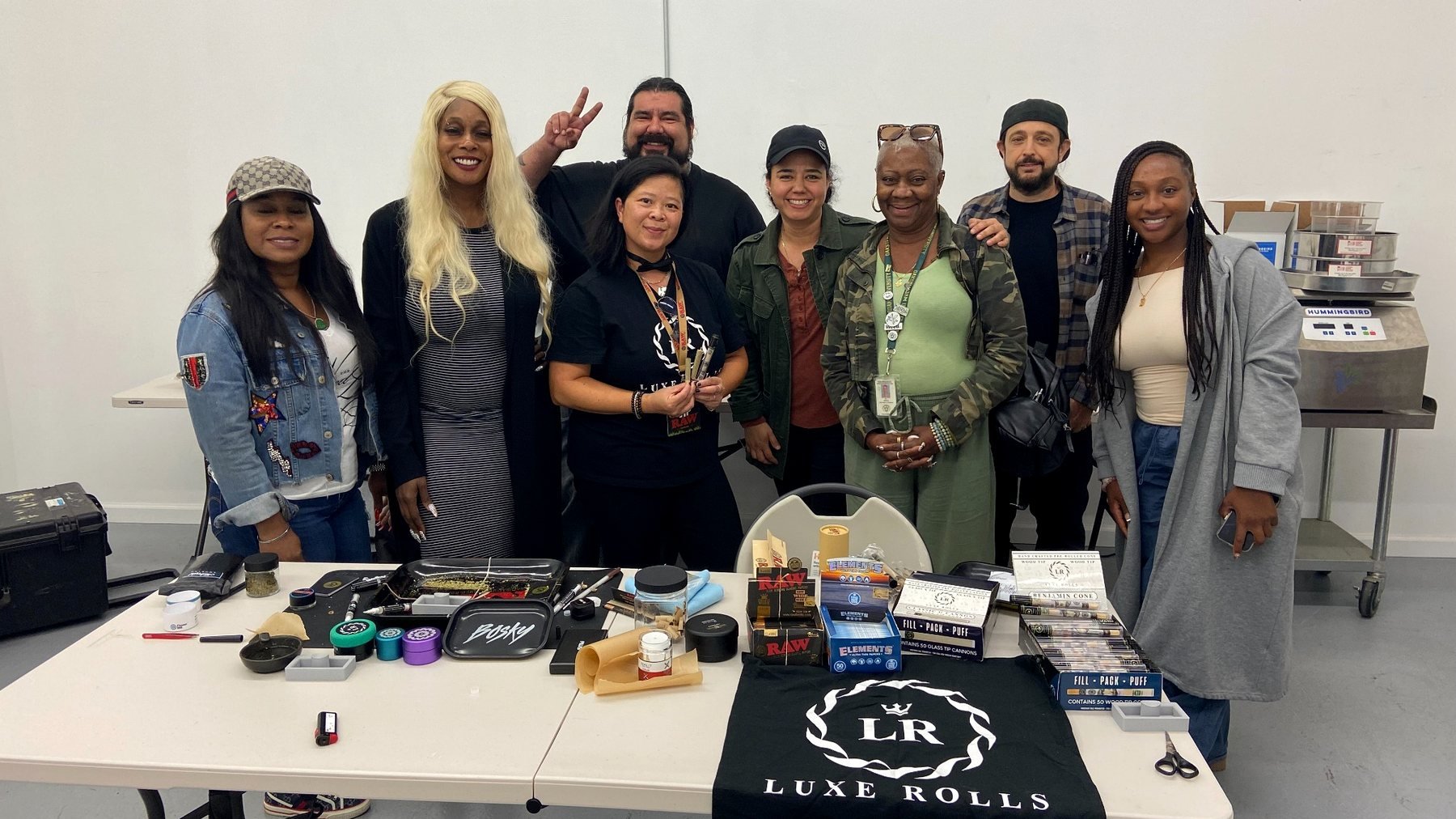
Oakland, CA cannabis licensed companies hash hole training with Grasshoppa.
Why the Modern Infused Preroll Is Becoming a Multi-Step Manufacturing Workflow
There is no single way to manufacture an infused preroll. Some manufacturers change the flower before it ever reaches the filling machine. Others fill first and inject concentrate afterward. Others transform the outside of the finished preroll with oil, kief, THCA, hash, or multiple coatings. Increasingly, brands combine several of these methods in the same product. Connoisseur hash hole handrolls can command a premium.
That is why infused preroll manufacturing is becoming less about finding one machine and more about building a production workflow.
Different Infused Preroll Products Require Different Manufacturing Workflows
If the first decade of infused pre-rolls taught the cannabis industry anything, it’s that there is no such thing as a standard manufacturing process.
Ask ten manufacturers how they build an infused pre-roll and you’ll probably hear ten different answers. The ingredients may sound familiar—flower, kief, distillate, live resin, live rosin, THCA, liquid diamonds—but the order they’re combined, the temperatures they’re processed at, the equipment they’re mixed with, and even the point at which concentrates are introduced can vary dramatically from one production floor to the next. So can the equipment, from old-school bump boxes to processing in cold rooms.
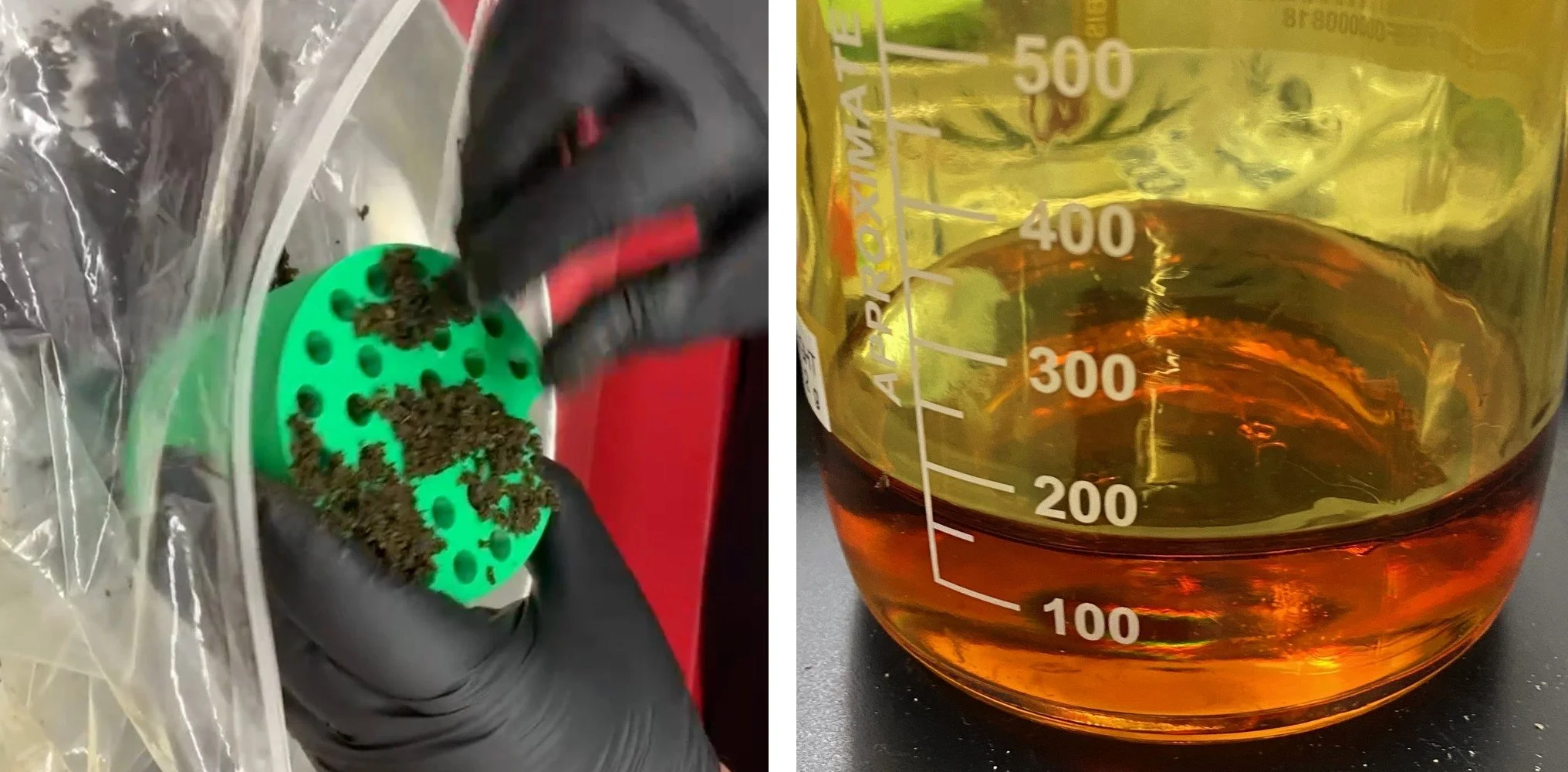
Preroll manufacturing inputs vary. The best production process depends on the material. Wet infusions can be highly viscous.
A value-priced infused distillate pre-roll selling for $2.50 has very different manufacturing goals than a premium solventless five-pack retailing for $35. One company may prioritize production speed and consistency because it is manufacturing hundreds of thousands of units every month. Another may willingly sacrifice throughput because it is focused on exceptional flavor, a flawless close, and a limited-release product. Both can be successful, yet the manufacturing philosophy behind each may have almost nothing in common.
How Infused Materials Change the Manufacturing Process
Infused material can behave very differently once it reaches the filling and compaction stages. Denser, wetter, or more cohesive formulations can compact more, changing how much physical volume a given weight occupies inside the preroll.
That means two 0.5-gram infused prerolls can be very different manufacturing problems. A 0.5-gram rosin formulation and a 0.5-gram product made with 40% distillate can differ substantially in density, flow, compaction, and finished size.
The format matters too. The same formulation may behave very differently in a short cone, a longer cone, or a straight tube because each format gives the material a different amount of space and a different packing geometry. Choosing the right cone or tube for the product becomes part of the manufacturing decision, not just a branding decision. For more on that, see Know Your Cone.
And once concentrate is injected after filling, the variables multiply again. The amount injected, where it is placed, and how it interacts with the flower can further change the physical characteristics of the finished preroll.
All of these choices affect the manufacturability, size, consistency, and smokeability of the finished product.
Pre-Roll Infusion Machines: Injection, Hash Holes & Donut Prerolls
Injection takes a different approach to internal infusion. Instead of infusing the flower before filling, the preroll is manufactured first and a measured dose of concentrate is injected afterward.
Precision dosing and automation systems from companies such as the PICC Platform, Sorting Robotics, Thompson Duke Industrial, and Xylem Robotics have helped move this method from a largely manual process toward repeatable production. Thompson Duke and Xylem also bring years of experience working with viscous concentrates in vape manufacturing, where temperature, dose, and placement all matter.
The advantage is separation. The filling machine can process relatively normal flower while concentrate is introduced during a second production step. Depending on the system, manufacturers can control the amount of concentrate added and where it is positioned inside the preroll. Each approach has its own advantages, limitations, and place in the production workflow.
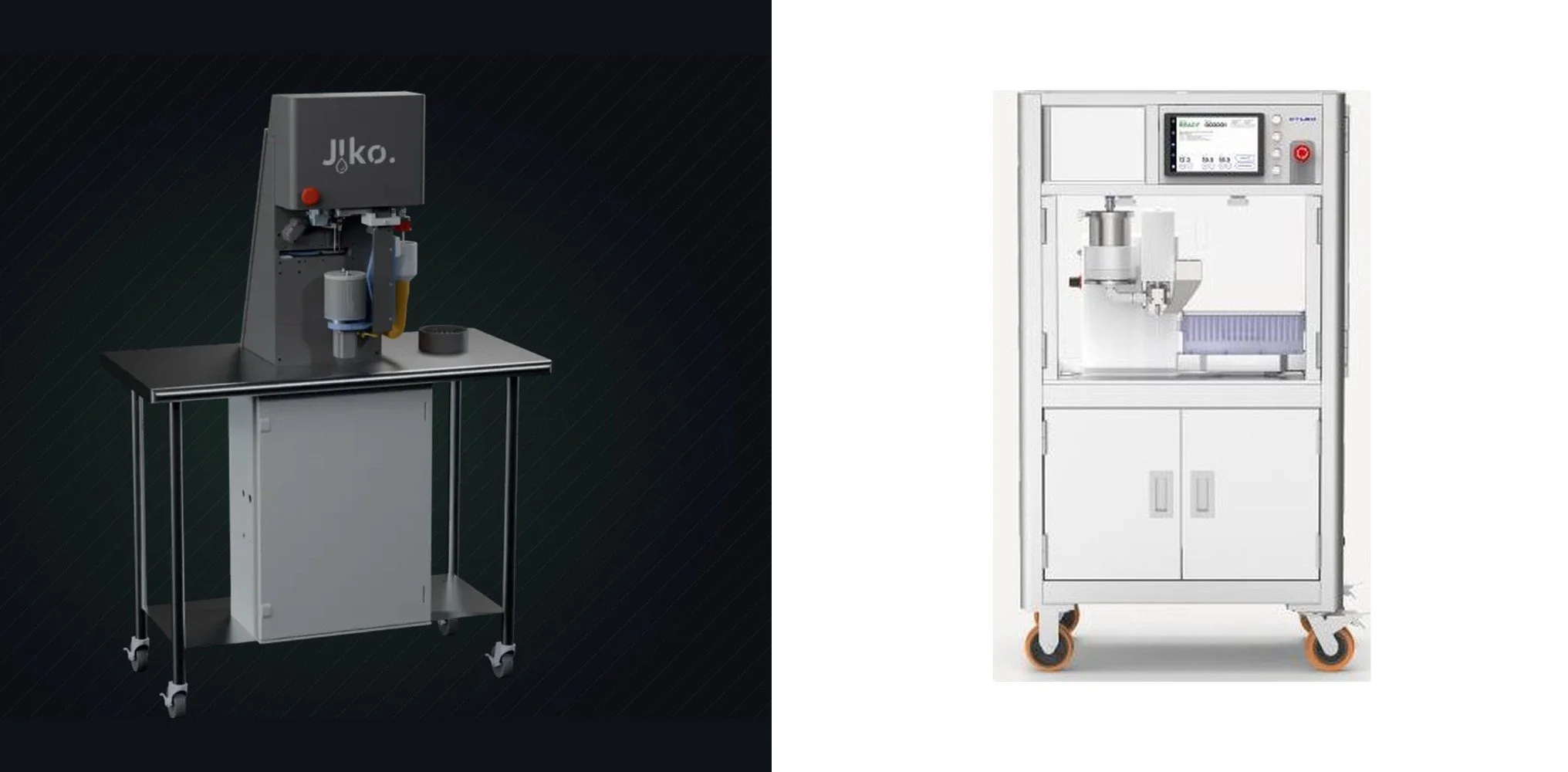
Dedicated infusion systems separate preroll filling from concentrate dosing, allowing each production step to be controlled independently.
Precision Dosing vs. Homogeneous Infusion
Precision dosing is not the same as homogenization. With injection, concentrate is placed at a defined location inside the preroll rather than distributed throughout the flower before filling.
Depending on the formulation, dose, and injection pattern, this can create a very different finished product from a homogeneous internal infusion. That difference affects more than potency. It can change density, burn behavior, finished weight distribution, and the overall smoking experience.
Injection avoids sending heavily infused material through the filling machine, but it also adds another production step. That tradeoff is one reason there is no single “best” way to manufacture an infused preroll.
Live Rosin, Live Resin & Other Concentrates
The concentrate matters too. Live rosin, live resin, distillate, and other formulations can behave very differently as temperature and viscosity change. A process that works well with one concentrate may require different temperatures, dosing parameters, or handling with another.
That becomes especially important with hash holes and donut prerolls, where the concentrate is not simply an ingredient—it is a structural part of the finished product. The formulation, the flower surrounding it, the preroll format, and the amount of concentrate all have to work together.
Newer Hash Hole Machines: BoxFinisher, PreRoll-Er 200 & Astro Infuser 2
The growth of hash holes and donut prerolls is bringing more equipment manufacturers into the category. BoxFinisher, PreRoll-Er 200, and Astro Infuser 2 are part of that expanding lineup. But adding an infusion feature is not the same as mastering preroll manufacturing.
At Hummingbird, we believe in staying in your lane. A machine should earn its place in the production line by solving a specific manufacturing problem consistently. More functions do not automatically mean better throughput, easier maintenance, or a stronger finished product. The question is what happens on the production floor.
We have encountered many service issues firsthand with the BoxFinisher infusion attachment. That is our experience with that equipment, not a claim about every installation. The larger point applies to everyone—including Hummingbird: know your specialty, support your equipment, and make sure each machine improves the complete workflow.
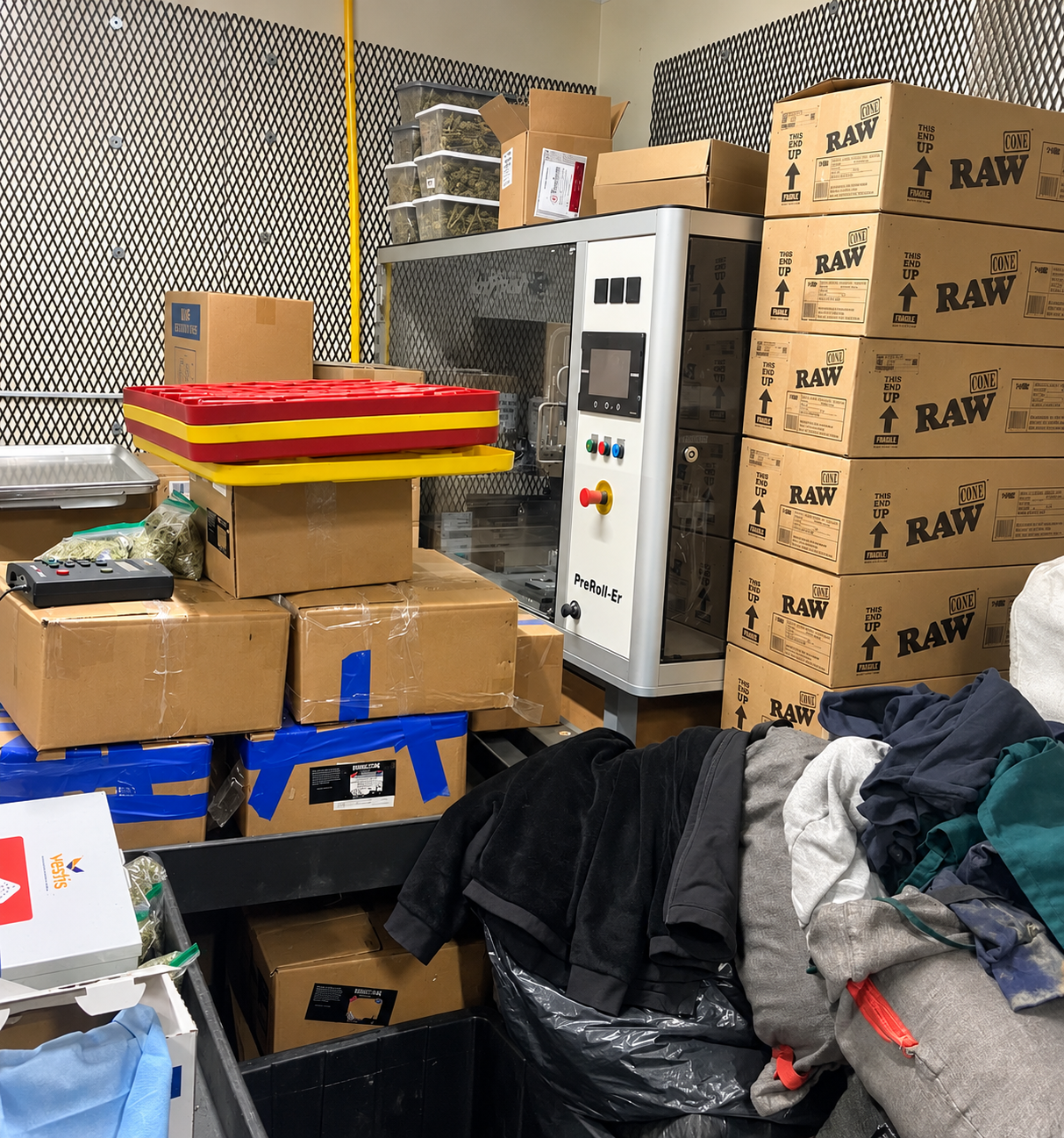
BoxFinish-er Spotted in the wild in Oakland, CA. Adding another function to a machine does not automatically improve the complete manufacturing workflow.
Hummingbird Preroll Workflow: From Filling to Infusion
Our approach is to keep filling and infusion as separate production steps. The preroll is filled first, then transferred into the next stage for concentrate dosing. That allows the filling process to focus on producing a consistent preroll while the infusion step handles concentrate placement as a separate operation.
The upcoming Hummingbird Injection Pod System is being developed around that workflow. Filled prerolls will transfer from the Hummingbird filling process into dedicated pods for infusion rather than asking one machine to fill, inject, finish, and manage every variable at once.
Coming soon: we’ll document the pod transfer, infusion process, and production workflow here as development continues.
External Infusion: Coating Prerolls With Oil, Kief, THCA & Hash
External infusion follows an entirely different philosophy.
Instead of changing the flower before filling, manufacturers first build a conventional pre-roll and transform it afterward. Concentrate may be applied manually or through automated systems before the preroll is rolled through kief, THCA isolate, hash, or another cannabinoid-rich coating. Products like the Tarantula helped make this approach recognizable because consumers could immediately see the difference.
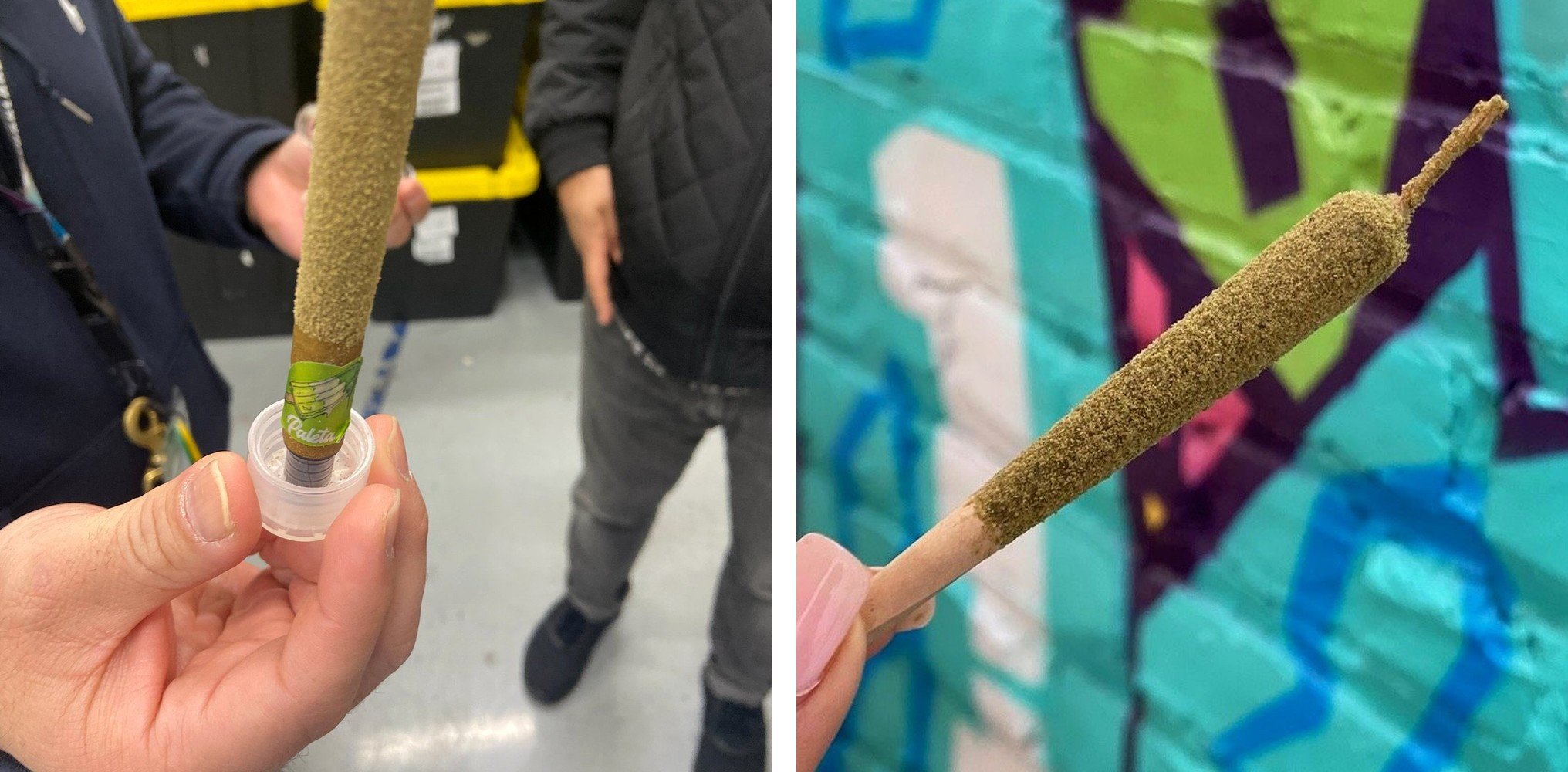
External infusion turns the outside of the preroll into another part of the formulation, adding new coating, handling, and packaging requirements.
Production Challenges With Externally Coated Prerolls
External infusion creates its own production problems. Coatings must remain consistent, finished prerolls require additional handling, and drying or curing may become part of the workflow. Packaging also matters earlier because the outside of the product is now just as important as what is inside it.
Neither internal nor external infusion has emerged as the clear winner. The industry continues supporting both—and increasingly combining them.
Consumers are not looking for one type of infused preroll; they are looking for different experiences. Some prefer the cleaner appearance of internally infused products. Others want the visual impact of a heavily coated preroll. Some prioritize potency, while others care more about flavor, smoother smoke, solventless extraction, or the experience of a hash hole or donut.
Infused Preroll Automation: Mixing, Filling, Injection, Coating & Packaging
As infused products became more complex, equipment manufacturers had to solve a different problem: how to manufacture those products repeatedly at commercial scale.
That pushed companies to specialize in different parts of the production process rather than trying to solve everything with one machine.
We’ve worked around many of these technologies and many of the companies developing them. What becomes obvious pretty quickly is that infused preroll manufacturing is not one equipment problem. It is a chain of manufacturing problems.
Each Machine Solves a Different Manufacturing Problem
A mixer can produce a beautifully homogeneous batch and still create material that is difficult to fill. An injection system can deliver an incredibly precise dose but still depend on a consistently manufactured preroll entering the process. A coating system can create a spectacular finished product, but only after the underlying preroll has already been filled and finished correctly.
Mixing, filling, dosing, injection, coating, finishing, and packaging are different manufacturing operations. The strongest production systems recognize that instead of pretending one machine can solve all of them.
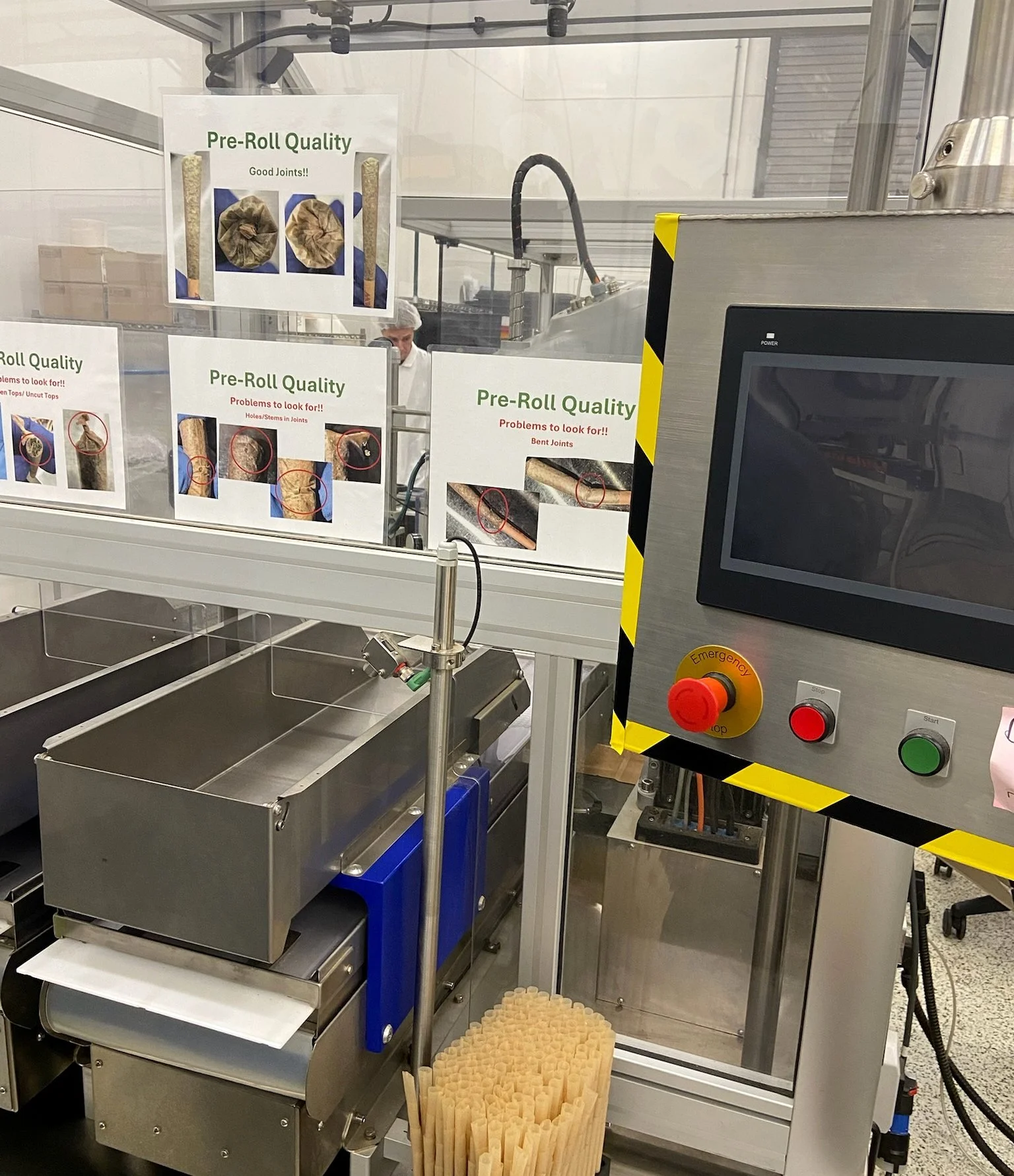
Preroll-er 200, used for 2 months. Michigan. Filling, quality control, infusion, finishing, and material handling all have to work together resulting in multiple failure points. Additionally, one a dedicated engineer has a shot ($125K+ annual salary
Building a Complete Infused Preroll Production Line
In many facilities, these technologies are not competitors at all. They are steps in the same production line.
A manufacturer might blend one concentrate into the flower, fill the preroll, inject another concentrate after filling, apply an external coating, finish the product, and then package it. The finished preroll may pass through several pieces of specialized equipment before it ever reaches a consumer.
That is a long way from simply putting some kief in a joint.
Cannabis will keep rewarding experimentation. New concentrates, formulations, papers, tips, formats, and product ideas will keep arriving, and manufacturers will keep finding ways to commercialize them.
But no matter how sophisticated the upstream or downstream process becomes, every internally infused workflow eventually reaches the same question:
Can you actually manufacture the preroll consistently?
From Infused Prerolls to Hash Holes
Whether the finished product is called an infused preroll, a hash hole, a donut preroll, or something that has not been named yet, the manufacturing challenge is increasingly the same: connect the right formulation, preroll format, grinding process, filling process, infusion method, finishing process, and packaging system in the right sequence.
The products will keep changing. The manufacturing fundamentals will not.
Next in the series: An In-Depth Look at Handrolling, Mixing, and the Economics of Infused Preroll Production
