
Do Your Research: COAs
Sell-In vs. Sell-Through: What COAs Reveal About the Preroll Market
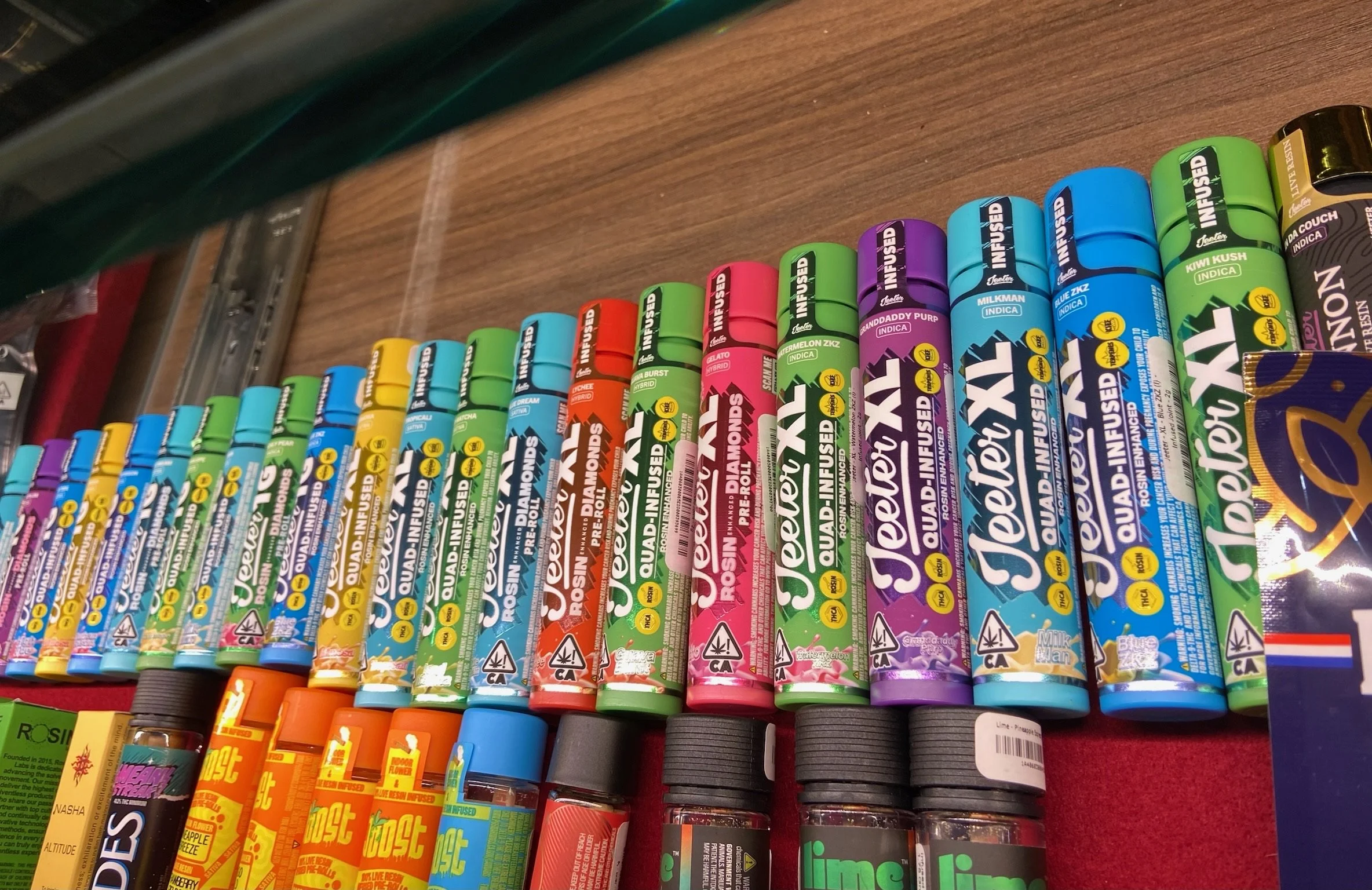
Jeeter Preroll Line Up, Alameda Dispensary
Top California Preroll Brands
What do STIIIZY, Raw Garden and Jeeter — a DreamFields brand — have in common? They all leave one of the most valuable pieces of competitive intelligence hiding in plain sight: the COA.
I miss my access to NABIS.
The Certificate of Analysis is one of those documents everyone in cannabis knows, but depending on where you sit in the supply chain, you probably look at it very differently. Dispo folks might look at potency, terps and expiration dates. Compliance and quality teams have their own reasons for opening it. As a former cannabis preroll manufacturer and current preroll equipment provider, I look at the COA through an operations lens. For me, the COA is and will always be the holy grail of competitive research for the cannabis preroll market.
What would I look for? Batch size, processor, distributor, grower, pack sizes, infusion type and testing dates. I want to understand what the manufacturer decided to make, how much they made, who was involved in making it and whether they continued making it. None of those data points tells you everything by itself, but start connecting them and you can learn an incredible amount about another manufacturer’s operation.
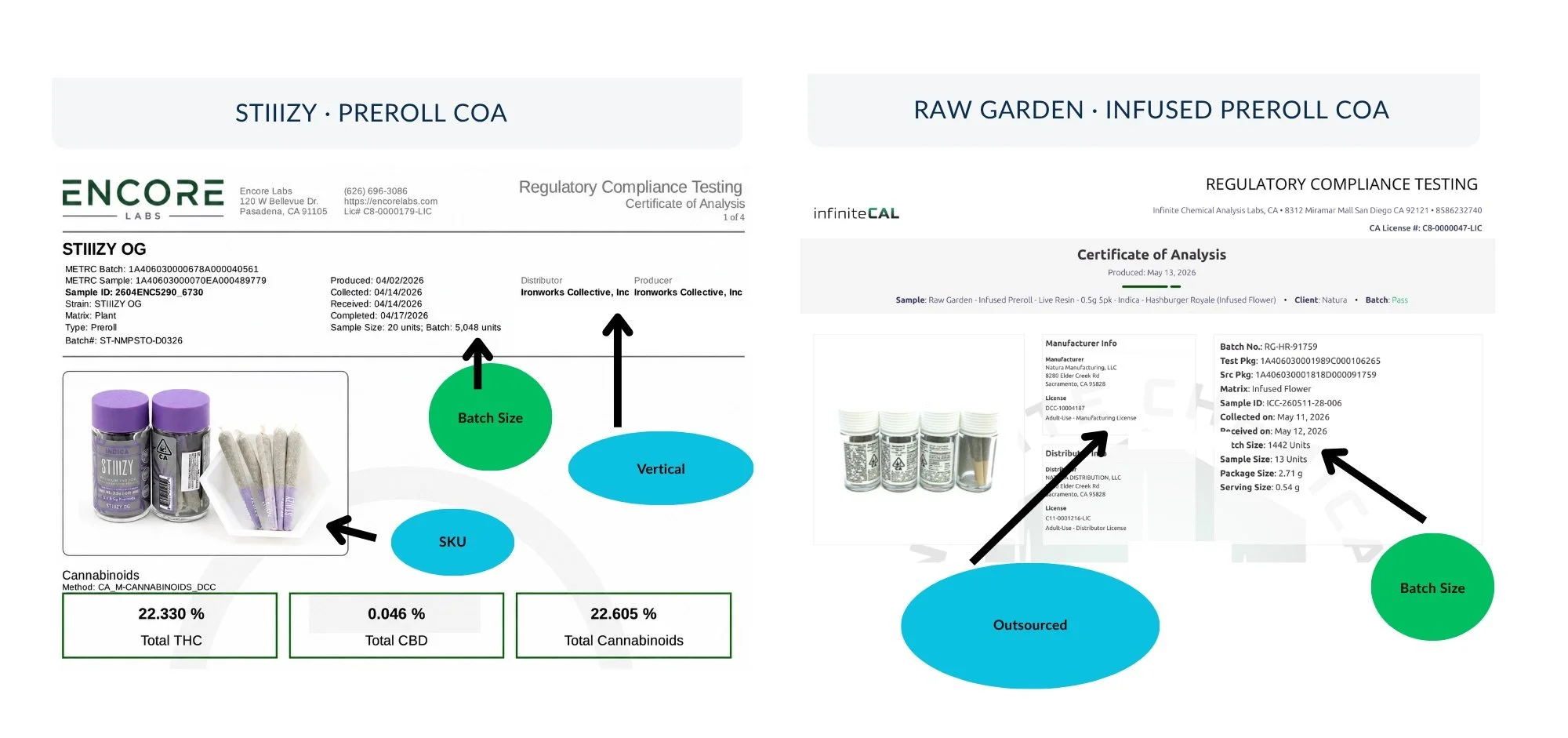
Batch size, processor, distributor, grower, product format and testing information can provide useful competitive intelligence.
Think about everything that happened before that COA was created. Leadership had expectations. Sales had forecasts. Marketing had a plan. Planning had projections. Operations had capacity. Purchasing committed to flower, concentrates, cones, tubes, packaging and everything else necessary to manufacture that product. By the time the product reaches the lab, those forecasts and opinions have become a real production run with real money behind it.
The COA is the receipt for that decision. It is where C-level strategy, sales forecasts, marketing plans and operational capacity become an actual production commitment.
Sell-In vs. Sell-Through
This is where the distinction between sell-in and sell-through becomes important. We hear a lot about retail market share and sell-through in cannabis, and that information is obviously valuable, but it tells a different part of the story. Once a product reaches a dispensary, store-specific dynamics take over. Demographics, inventory, promotions, discounting, placement, competition and other variables all influence what ultimately moves through that store.
Sell-in takes us further upstream. Before anybody knows exactly how that product will perform at retail, a cannabis manufacturer has already made a bet. Material was allocated, packaging was purchased, labor was scheduled, production capacity was committed and testing had to be paid for. Somebody believed enough in that SKU, pack size and product format to manufacture it. That is the decision I am interested in when I open the COA.
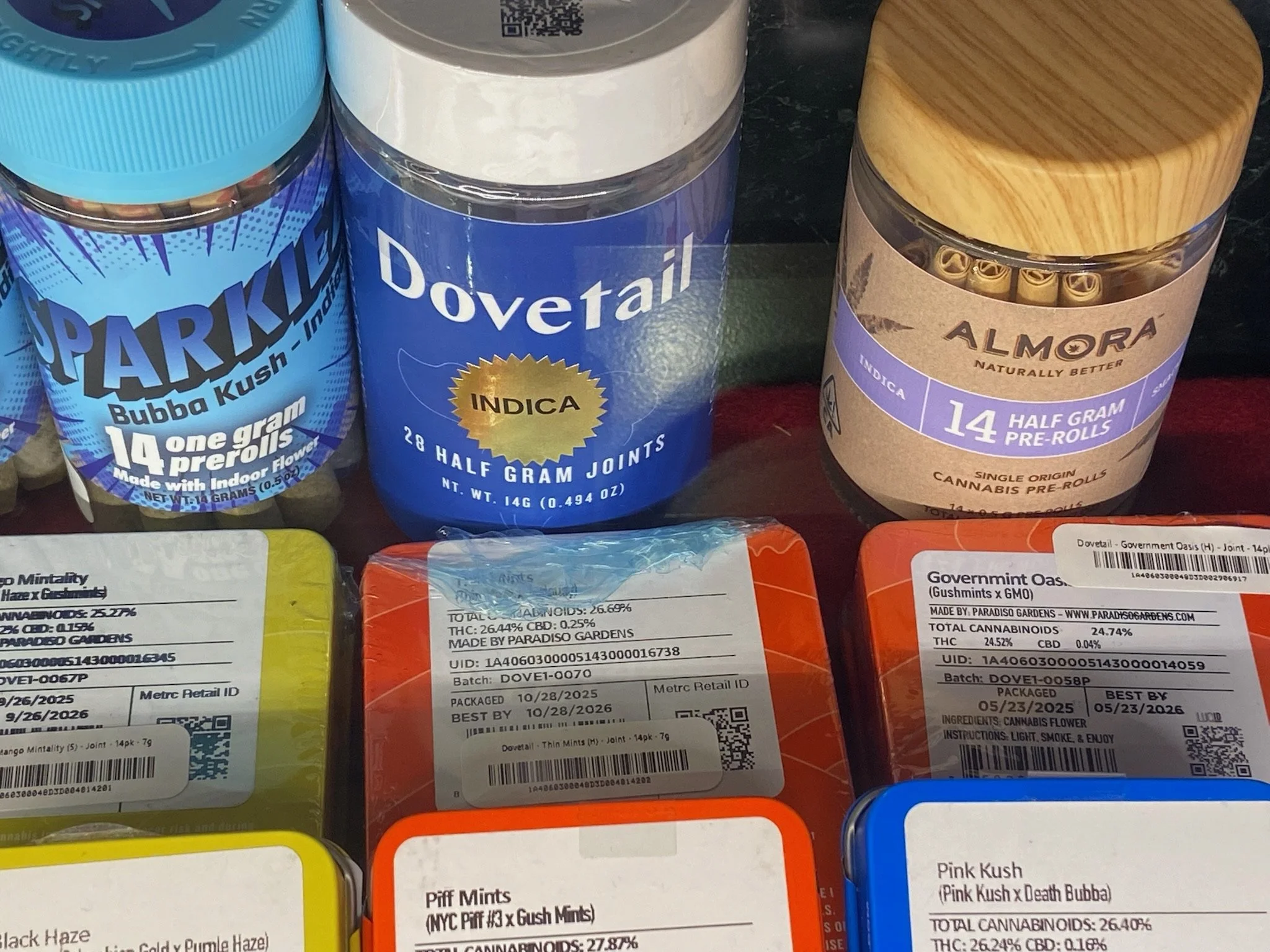
Different product formats and pack sizes can require different materials, labor, production steps, and equipment.
This is also why I don’t start with THC percentage. If I am researching a preroll manufacturer, I care much more about what they are manufacturing. A 1-gram flower preroll represents one production strategy. A five-pack of half-gram infused prerolls represents another. A dogwalker multipack, glass-tip preroll or blunt tube can require different packaging, materials, production steps, labor and preroll equipment. Product format tells you something about where a manufacturer sees opportunity, while batch size and testing dates begin telling you something about the scale and frequency of those manufacturing decisions.
One COA is interesting. Collect COAs from the same manufacturer over time and you can start looking for patterns. Are batch sizes getting larger or smaller? Is the same SKU appearing repeatedly? Did a new pack size show up? Are they expanding their infused preroll line? Did a product that appeared regularly suddenly disappear? You can begin seeing changes in production cadence, SKUs, formats and manufacturing patterns. None of this gives you the entire answer, but good competitive research is rarely about finding one document with the answer. It is about knowing which signals matter and then connecting them.
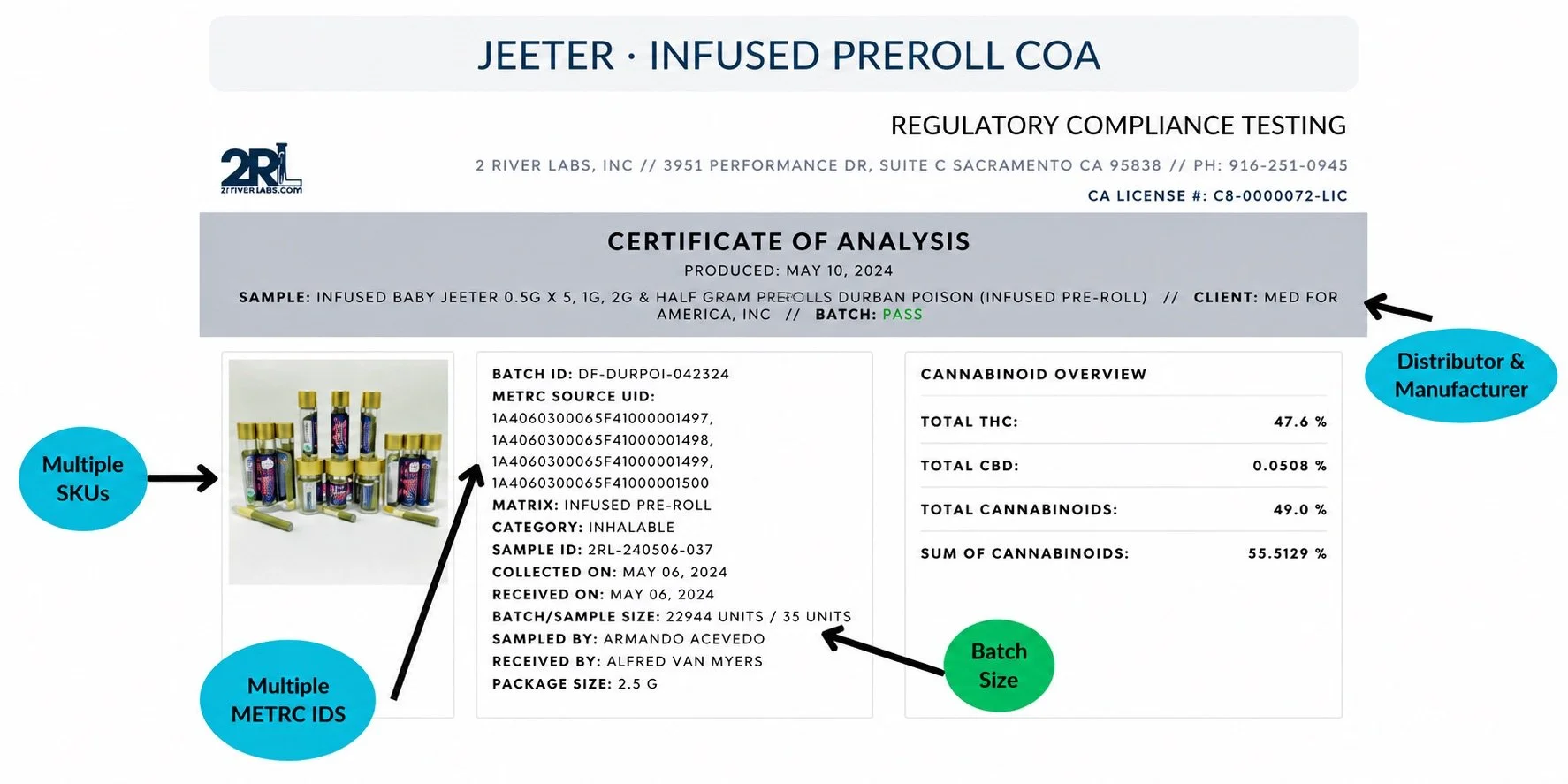
Batch size, processor, distributor, grower, product format and testing information can provide useful competitive intelligence
There is an important distinction here. A COA does not tell you sell-through. Another production batch does not tell you exactly how many units consumers purchased, how quickly they moved, whether retailers discounted them or why one store performed differently from another. That requires retail data. What another COA tells you is that somebody decided to commit resources to manufacturing that product again. From an operations perspective, that is valuable information.
Follow the Supply Chain
COAs become even more useful when you combine them with the rest of the information available in the cannabis supply chain. Look at dispensary menus. Compare price tiers and pack sizes. Watch promotions and discounts. Pay attention when new preroll formats appear. Look at the processor, cultivator and distributor. Follow the finished product backward and start asking who touched it, who manufactured it and what had to happen operationally for it to reach the dispensary shelf.
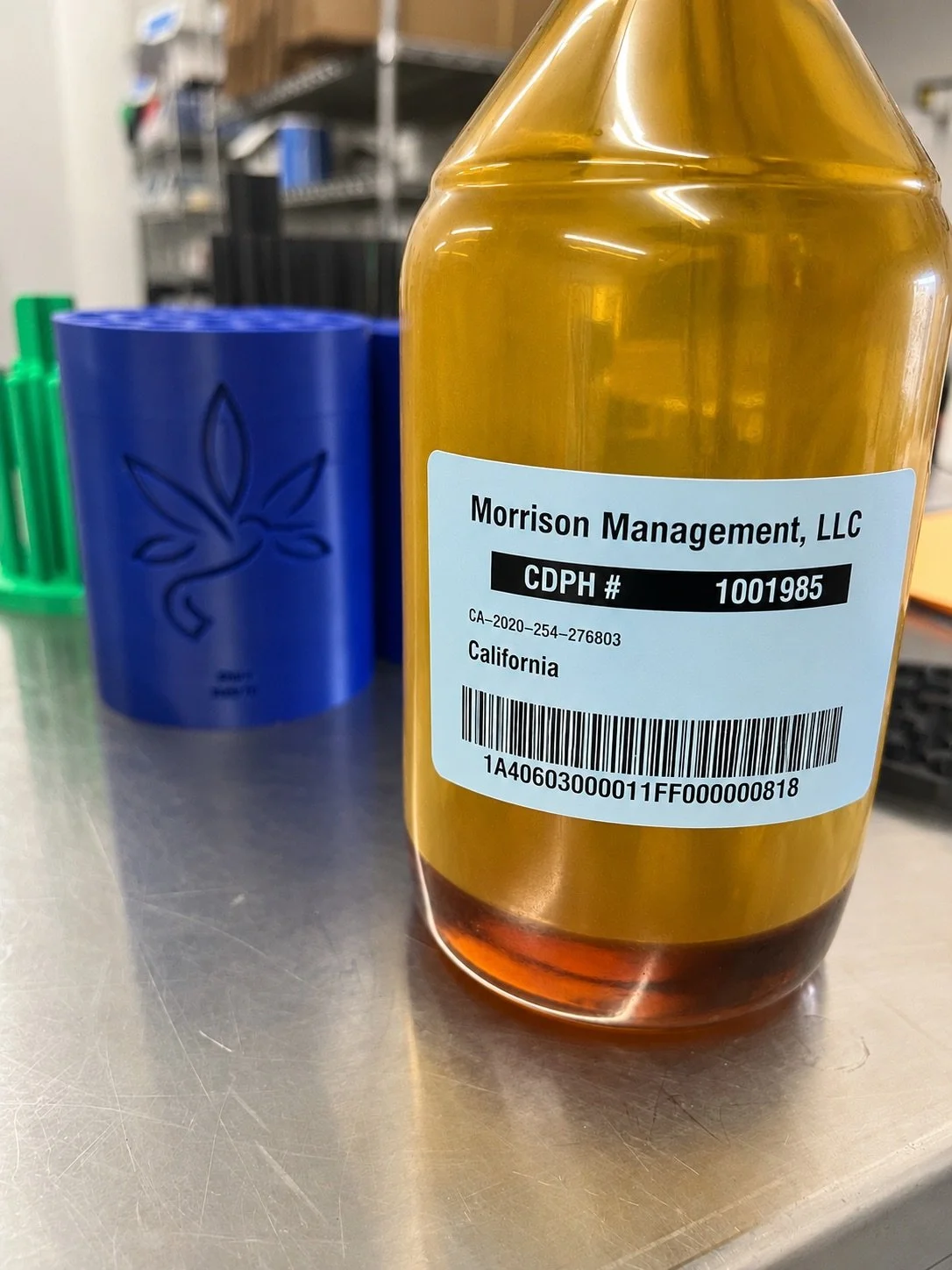
METRC tracking provides another piece of the cannabis manufacturing and supply-chain picture.
That is how I like to approach preroll market research. I am not looking for one magical source that tells me everything. I am accumulating information from different parts of the supply chain and figuring out how the pieces connect. The COA happens to be one of my favorite pieces because of where it appears in the process. The cannabis product has already been manufactured, real resources have already been committed, and a series of internal business decisions has become something an outsider can actually see.
For anyone involved in cannabis preroll manufacturing, those decisions matter. Manufacturers have to decide which products deserve production capacity, how many units to make, which pack sizes to support, what materials to purchase and where preroll automation makes financial sense. Those decisions eventually affect labor requirements, packaging, cones, blunt tubes, infusion processes and the type of preroll equipment an operation needs.
This is especially important to us at Hummingbird because we build preroll equipment. A preroll machine does not operate in a vacuum. The right equipment depends on what you manufacture, your batch sizes, formats, material, labor, production cadence and where you expect the business to go next. Understanding the cannabis supply chain and the manufacturing decisions behind it makes us better at understanding the problems our customers are actually trying to solve.
Research Costs Time. Guessing Costs Money.
For our How to Make Money in Preroll Operations: 2026 Industry Guidelines, we used actual COAs from Raw Garden, STIIIZY and Baby Jeeter to show just how much competitive intelligence is sitting right in front of us. The COA section is only one part of the guide. We also look at market research, unit economics, production readiness, equipment strategy, workflow planning and the operational decisions behind building a profitable preroll program.
How to Make Money in Preroll Operations: 2026 Industry Guidelines
This article is Competitive Intelligence Pro Tip #1 and expands on the COA research from our 2026 Industry Guidelines. If you manufacture prerolls, are planning a preroll operation or simply want to better understand the business behind preroll production, download the complete guide.
Download How to Make Money in Preroll Operations: 2026 Industry Guidelines
The information is public. The advantage is knowing what to look for.
#DoYourResearch
